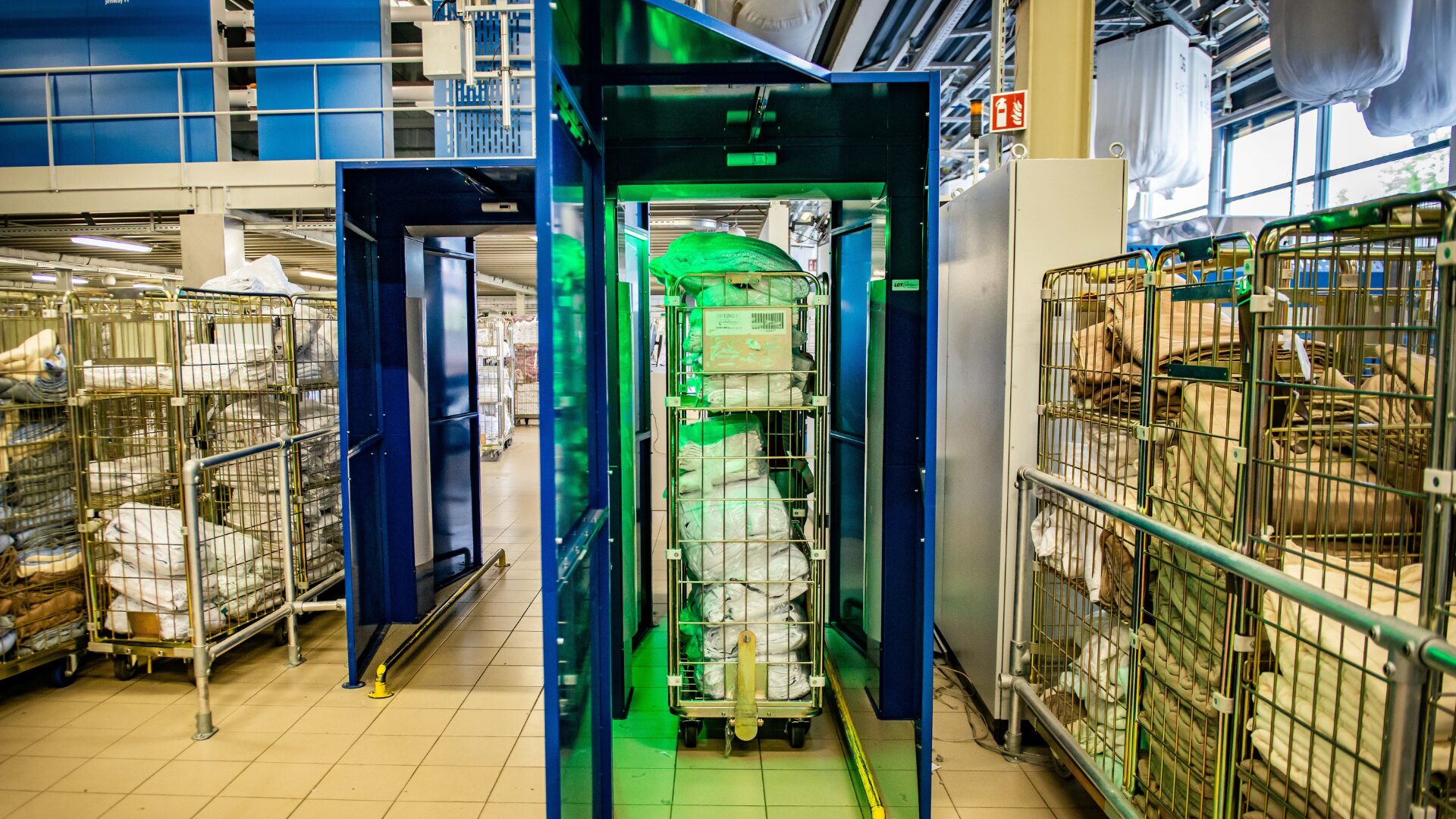
Industrial laundries have spent years perfecting visibility over textiles. RFID chips in linen, automated sorting, piece level tracking. A single towel can now be followed across its entire working life. Yet the container that carries that towel, the trolley, the cage, the roll cage, often makes the same journey completely unseen.
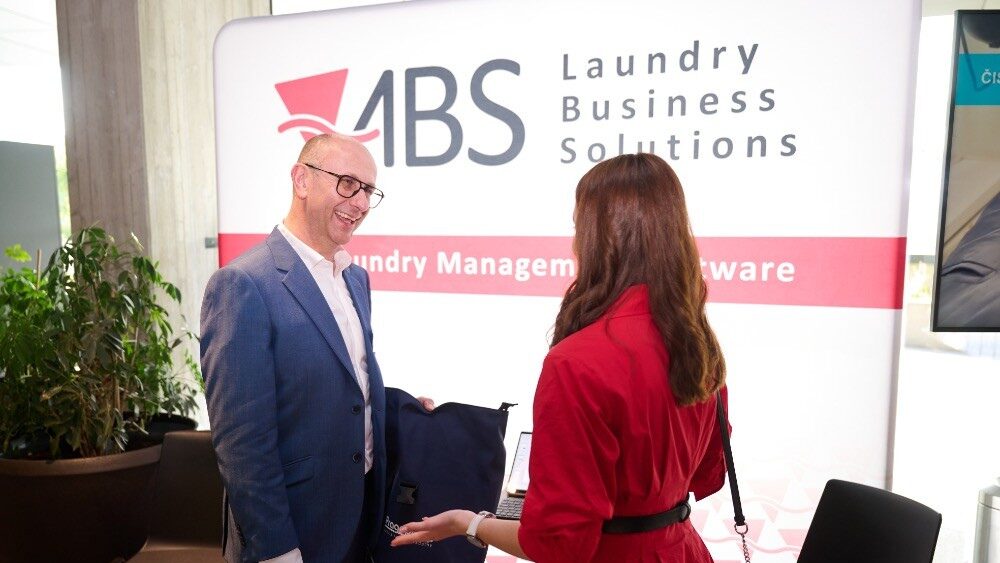
This is the paradox at the heart of modern laundry logistics. The sector has near perfect sight of its cheapest asset and almost none of its most expensive one. According to Robert Tye, Chief Commercial Officer at ABS Laundry Business Solutions, that blind spot carries a cost that most operations never put a number on.

Robert Tye, CCO
The industry can trace a two euro towel across its entire working life, yet often has no idea where a four hundred euro trolley is sitting today.
ROBERT TYE, CHIEF COMMERCIAL OFFICER, ABS
Executive Summary
Containers are the forgotten asset class in the laundry supply chain. They are expensive, they move constantly between the plant and hundreds of customer sites, and they are rarely counted until a shortage, an audit, or a billing dispute forces attention. Treating container visibility as a core function, rather than a manual afterthought, turns a silent cost into measurable control. The Container Recording module within ABSSolute manages that visibility inside the laundry ERP, alongside deliveries, routes, production, and billing.
The Asset Nobody Counts
Every industrial laundry runs on movement. Between 30 and 300 tons of laundry can pass through a single plant each day, carried by fleets of trucks servicing hundreds of customer sites. At the centre of that flow sit the containers. They deliver clean product and return soiled goods, cycle after cycle, day after day.
Despite their role, containers are often the least tracked element in the entire operation. The reason is simple. Textiles were the obvious candidate for tracking technology, because textiles are the product. Containers were treated as packaging, and packaging rarely gets counted.
The financial reality tells a different story. A single trolley or roll cage can represent hundreds of euros of working capital. Multiply that across a fleet of hundreds or thousands, spread across sites that a laundry cannot see into, and the container pool becomes one of the largest uncounted assets on the balance sheet.
A container is not a logistics detail. It is working capital on wheels, and most laundries have never put a value on losing sight of it.
ROBERT TYE, CHIEF COMMERCIAL OFFICER, ABS
Why Containers Slip Through the Cracks
The cost of an untracked container pool is rarely a single dramatic loss. It is a slow accumulation of smaller problems that stay invisible until they combine.
Containers disappear quietly. Without systematic tracking, a laundry cannot know how many containers sit idle at a customer site, how long they have been there, or whether they will return at all.
Replacement becomes reactive. When the plant runs short, the response is an emergency purchase rather than planned procurement, at a premium and on short notice.
Hygiene compliance cannot be proven. Healthcare and hospitality customers increasingly require evidence that containers are regularly disinfected. Without a scan history, that evidence does not exist.
Manual workarounds take over. Staff fall back on spreadsheets, phone calls, and standalone tools that do not connect to deliveries, routes, or billing.
Disputes replace facts. When a laundry cannot show which driver delivered which container to which site on which date, accountability turns into guesswork.
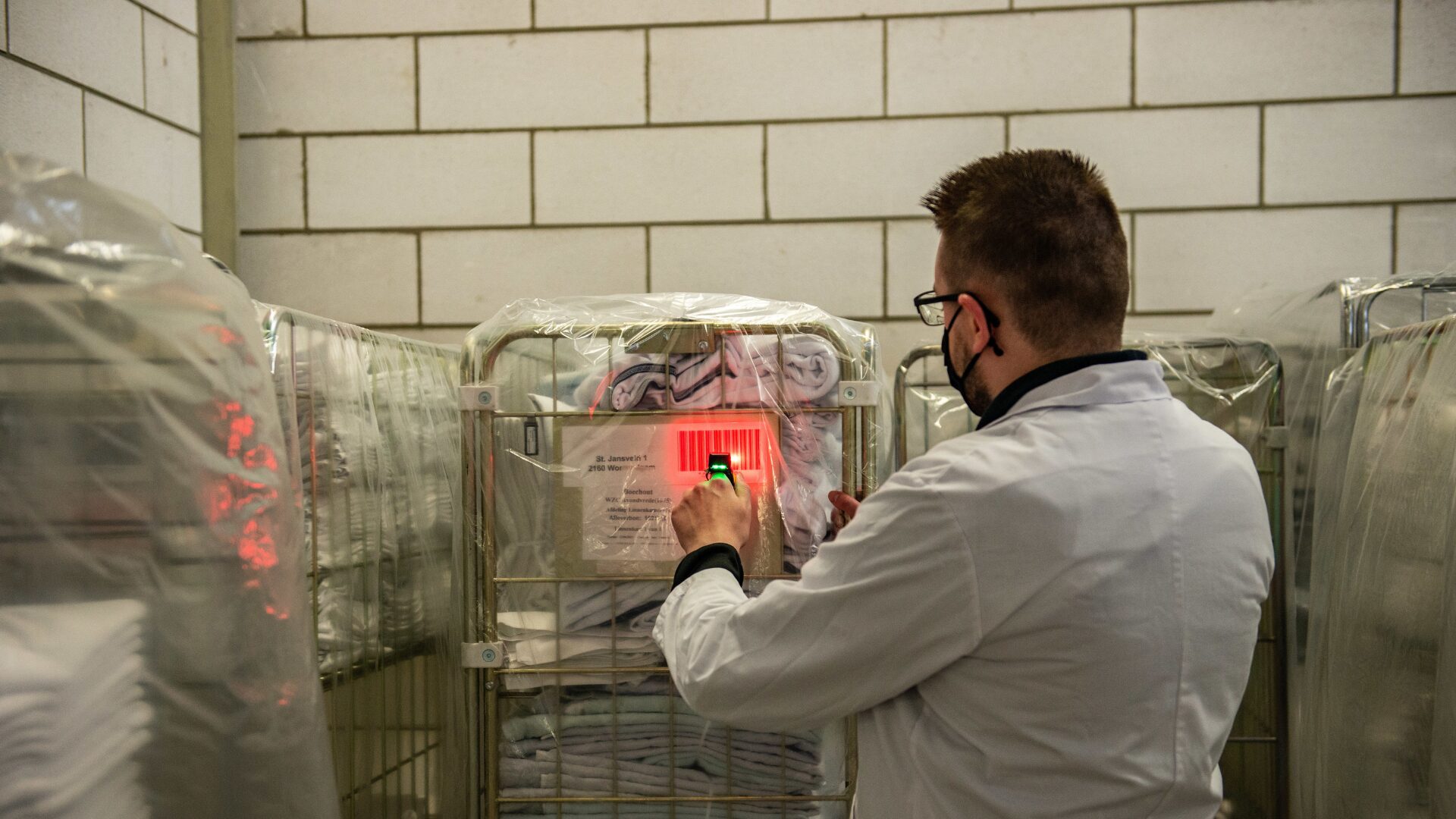
↑ Every movement begins with a scan, the moment a container becomes visible to the system.
Visibility That Lives Inside the System, Not Beside It
The instinct, when a problem like this surfaces, is to buy a dedicated tracking tool. Robert Tye argues that this instinct is part of the problem.
The answer is not another gadget. It is visibility that lives in the same system that already runs deliveries, routes, and billing.
ROBERT TYE, CHIEF COMMERCIAL OFFICER, ABS
Within ABSSolute, container visibility is handled by the Container Recording module, built into the laundry ERP rather than added alongside it. It follows each container across six moments in its life cycle.
1. Registration. Every container is given a unique identity, through a barcode or a UHF RFID transponder, linked to a type, an owner, and a tare weight. In ABSSolute Infinity this runs through a browser based wizard that prints labels automatically.
2. Out scan. As a delivery note is created, containers are scanned onto it, capturing the date, time, route, driver, customer, and department. The Truck Load Assistant then confirms that each container is loaded onto the correct vehicle for delivery.
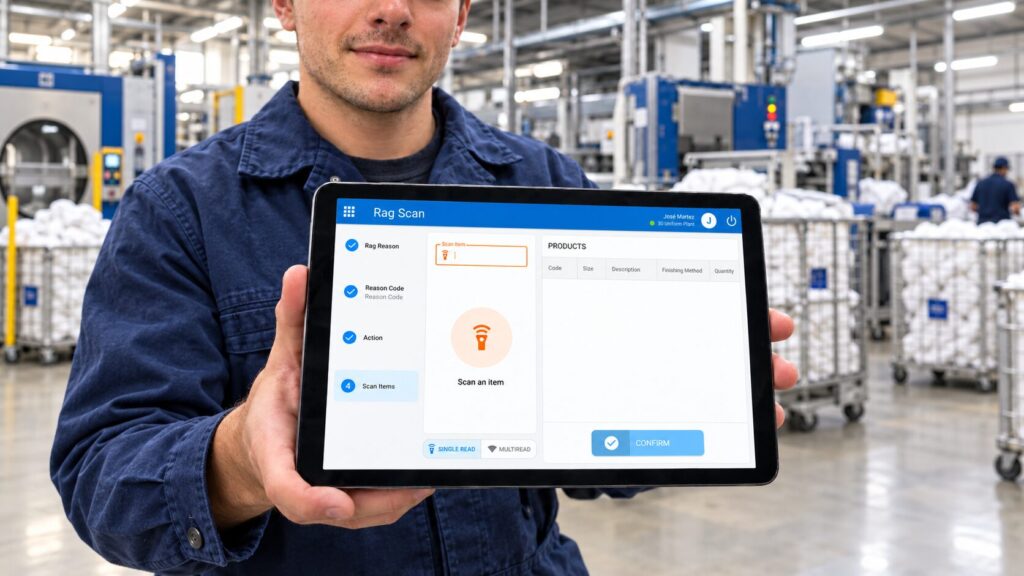
3. On route tracking. The Route Assistant, an Android application for drivers, captures deliveries and pickups at the customer site and can transfer containers between customers without a return to the plant.
4. In scan. When a container comes back, it is scanned in and its status flips from at the customer to in the laundry, a step that can be linked to the weighing process or to UHF RFID portals.
5. Production tracking. Checkpoint and check scans record the container at the tipping, inspection, and packing stations inside the plant.
6. Disinfection and maintenance. Dedicated transactions record when a container has been cleaned, disinfected, or taken out of service for repair.
Because every one of these moments sits in the same system, the location of any container is known at any time, whether it stands at a customer, on a truck, in production, in the buffer zone, or under maintenance.
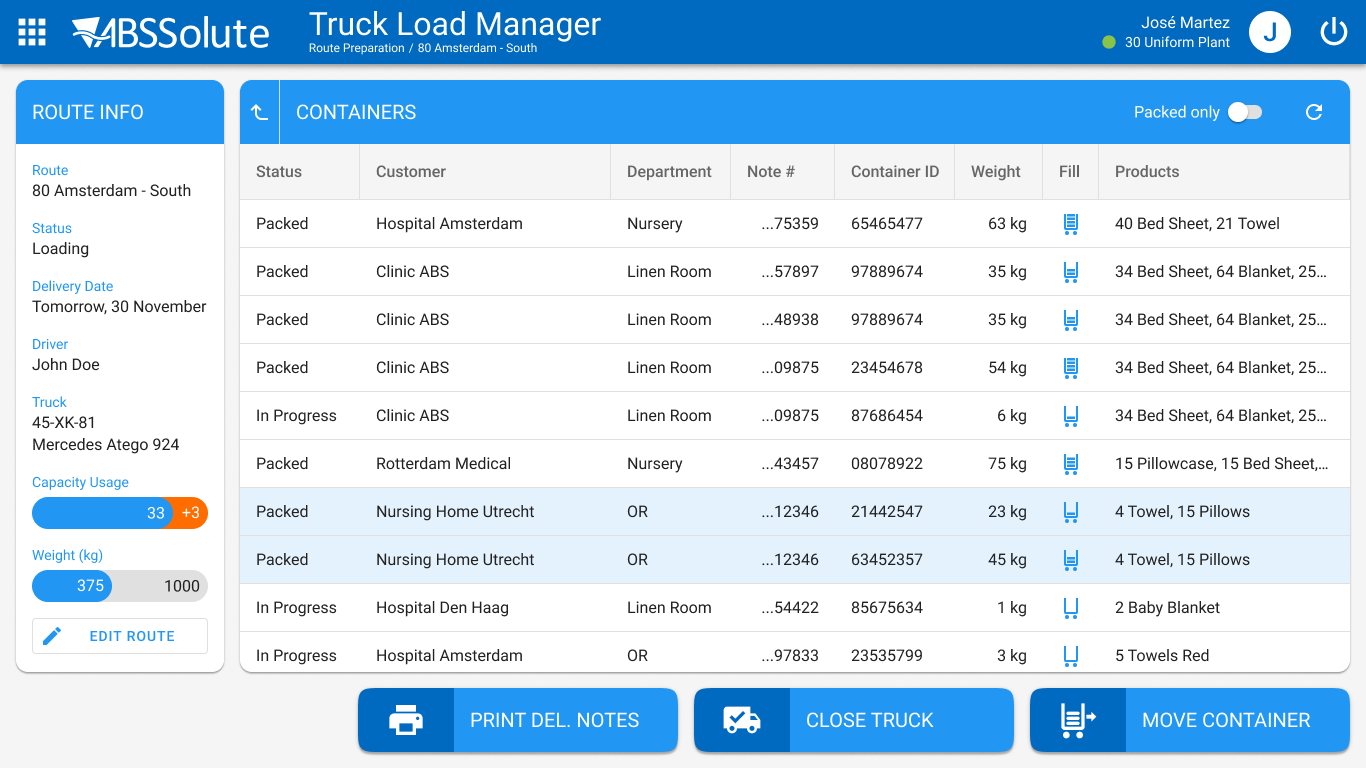
↑ Truck Load Manager, containers matched to routes and vehicles with available capacity in view.
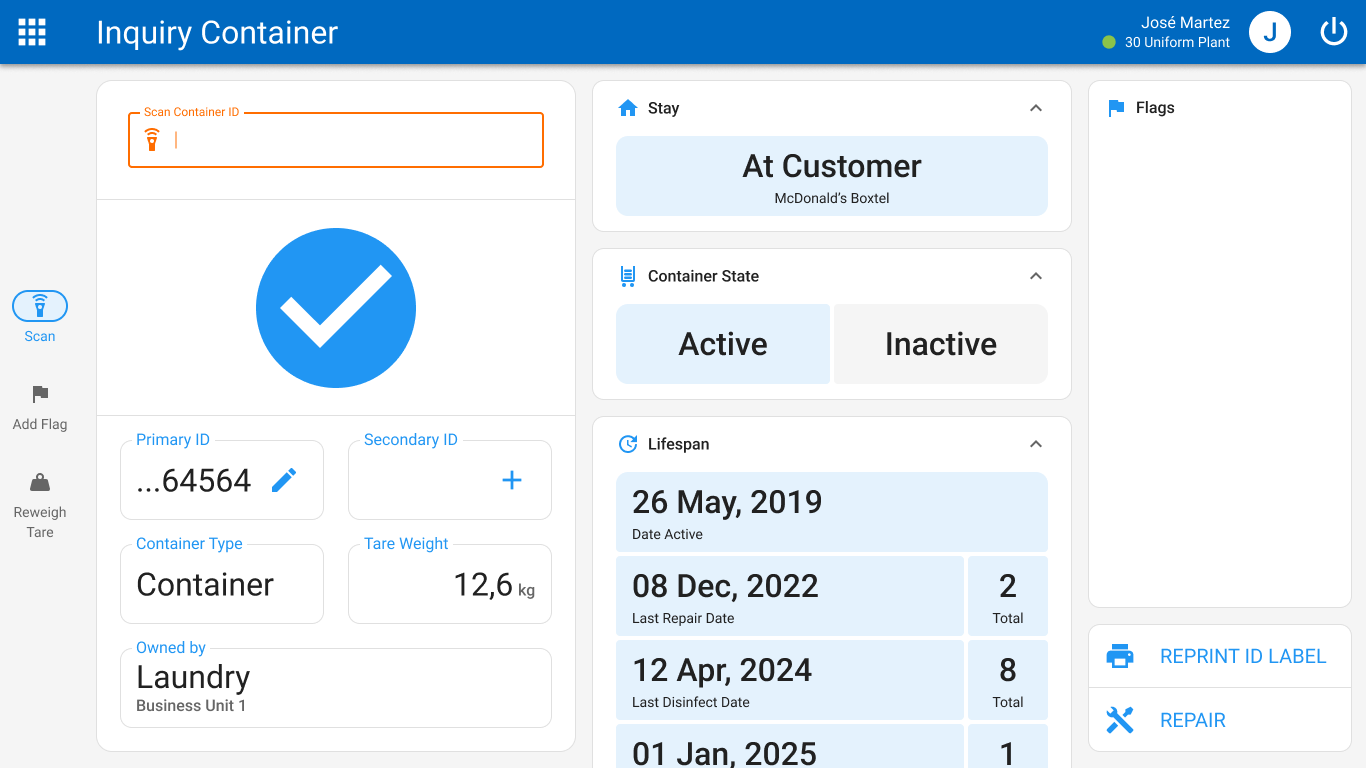
↑ Inquiry Container, the full status and scan history of any container in one view.
From Tracking to Accountability
Visibility is the foundation. What it enables is a different way of running the container pool.
🧩
No separate system
The container life cycle lives inside the ERP, removing double data entry and disconnected tools.
📍
Real time location
The status of every container is known at any moment, at a customer, on a truck, in production, or under maintenance.
🔄
Circulation insight
Slow rotating containers, customers who accumulate assets, and patterns of loss all become visible.
🚚
On route flexibility
Drivers move containers between customers through the Route Assistant without a return to the plant.
🧼
Hygiene proof
Timestamped disinfection records satisfy audit requirements, which matters most in healthcare laundries.
📋
Dispute resolution
A complete scan history per container replaces blame with fact.
There is a further step that turns control into revenue. The Container Billing function applies charges based on time spent on site, delivery of containers and boxes, and quantities that exceed an agreed allocation, while rewarding prompt returns with credits. What began as a way to find lost assets becomes a way to bill fairly for them, and in some cases a new revenue stream in its own right.
A Prime Example of Asset Misuse
While on holiday in the Cotswolds, Robert Tye noticed a laundry container positioned beside the wastewater treatment area of a countryside hotel. Curious, he took a closer look.
The container clearly displayed the branding of a well known UK commercial laundry. Instead of holding clean or soiled linen, it had been repurposed as a storage unit for water treatment chemicals. Its robust, weatherproof construction made it an ideal outdoor storage solution, though not one the laundry provider had intended.
This is a simple but powerful example of how valuable transport assets can gradually disappear from the laundry operation and be absorbed into a customer’s day to day activities. Without visibility, the laundry has no way of knowing where the container is or how it is being used, often only discovering the loss when a replacement is required.
With container tracking in place, the location of the asset and its prolonged presence at the site would have been identified, allowing the laundry to intervene before the container was effectively lost. Preventing just a handful of incidents like this can quickly justify the investment in asset tracking technology.
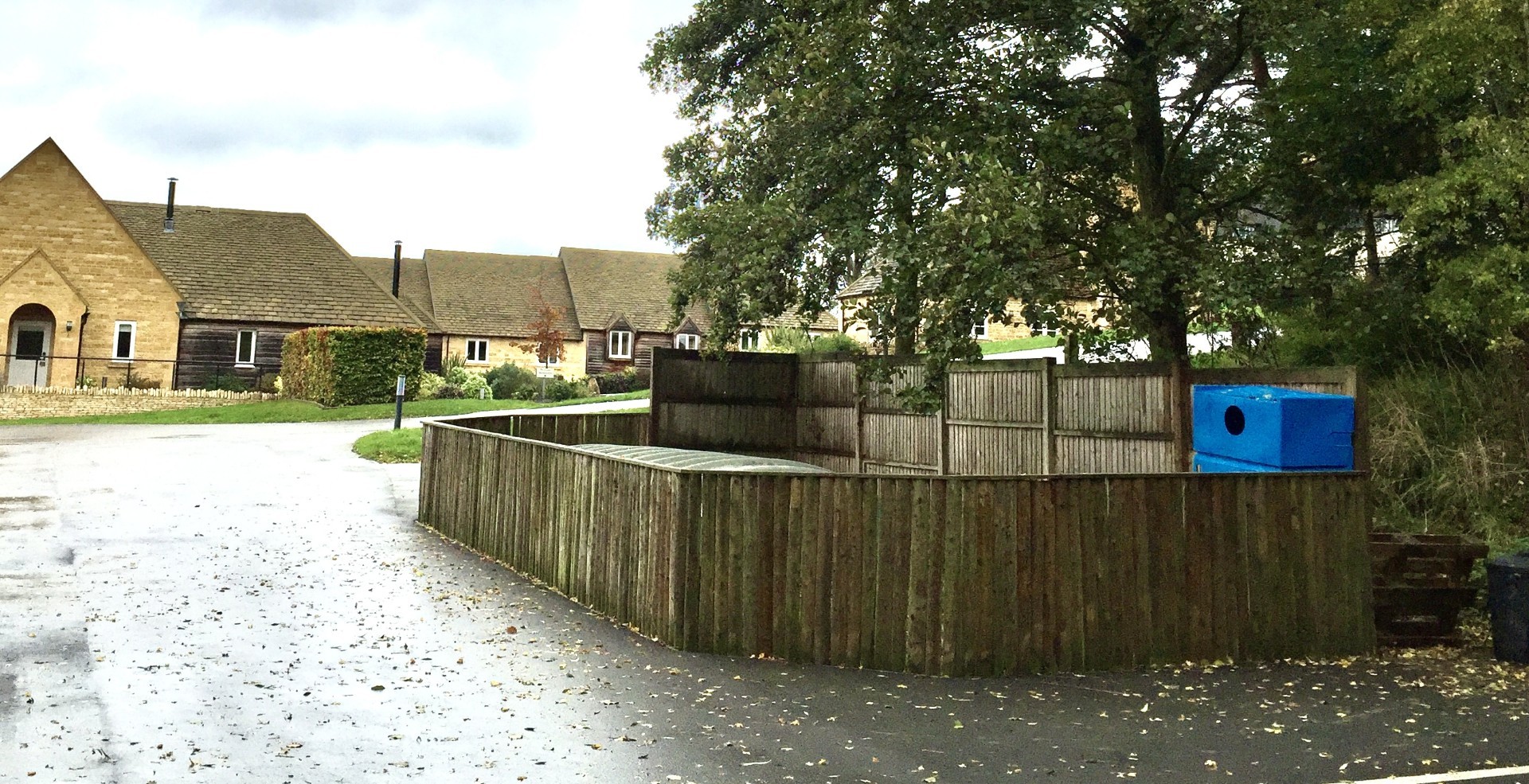
↑ A branded laundry container repurposed as outdoor chemical storage at a customer site.
Beyond Logistics, a Hygiene and Sustainability Imperative
Container tracking is easy to file under operational convenience. Robert Tye sees it as something larger.
Knowing where every container is, and proving it has been cleaned, is no longer a nice to have. It is becoming a condition of doing business in regulated markets, and a foundation for running a leaner, more sustainable operation.
ROBERT TYE, CHIEF COMMERCIAL OFFICER, ABS
The pressure will only grow. Hygiene standards in healthcare and hospitality are tightening. Sustainability targets reward every asset kept in circulation rather than replaced. A container pool that is fully visible, well rotated, and demonstrably clean answers all three demands at once. The forgotten asset, it turns out, may be one of the most strategic.