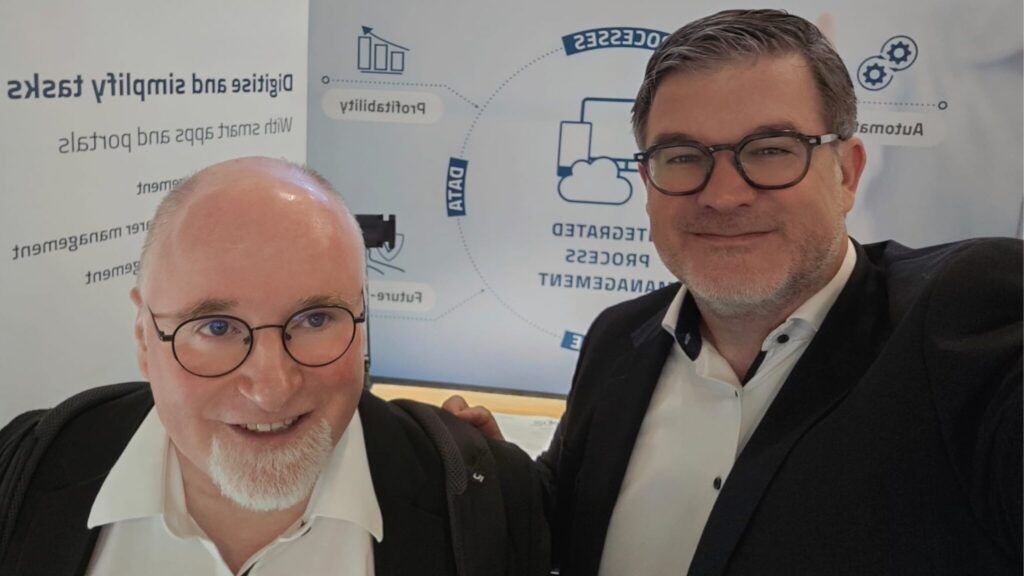
For an industrial laundry, the software that plans the work, tracks the linen, and keeps every order moving needs to behave the same way on a busy Monday as it did on the quiet Friday before. Behind that reliability sits a discipline that rarely gets the spotlight: quality assurance. At ABS Laundry Business Solutions, it is led by Sebastian Toader, Quality and Support Manager.
In this conversation Sebastian explains what quality assurance really means for a mature and highly customizable laundry platform, why deep knowledge of the laundry business matters as much as the testing itself, and what reassurance industrial laundries can take from the care behind every release.

Sebastian Toader, Quality and Support Manager
Knowledge specific to the laundry business is what differentiates us from any other company.
Sebastian Toader, Quality and Support Manager, ABS
Why It Matters
Quality assurance at ABS covers far more than a final check before release. It combines a clear testing strategy across every software product with a support structure that keeps existing customers running smoothly. For industrial laundries, the result is software that stays stable, adapts to the way each operation works, and is backed by a team that treats every reported issue as a chance to make the next release stronger.
What quality assurance means at ABS
The role sits on two sides at once. On one side is the quality strategy, covering both automated and manual testing across all software products. On the other is support, where the maintenance, database, and reports teams work alongside every other team to help existing customers resolve whatever issues they meet.
Two things make quality assurance at ABS distinctive. The first is the nature of the product itself. ABS software is a mature, proven platform, refined continuously since the early 2000s, and it is built to be highly customizable. That combination means there is a great deal to protect against regression on every deliverable, and that protection extends steadily as new satellite applications join the platform.
The second is business knowledge. According to Sebastian, understanding the specifics of the laundry business is what sets ABS apart, and that understanding runs right down to the purpose of each feature.
There is a further dimension Sebastian is keen to stress. During development, the quality engineer acts as an advocate for the customer, holding the customer’s perspective in the room and asking whether each feature will truly work on a busy laundry floor. It is a responsibility the team takes on with real pride, because the software helps customers deliver services that keep businesses, hospitals, and institutions running every day.
During development, our role is to be the voice of the customer in the room.
Sebastian Toader, Quality and Support Manager, ABS
What it means for an industrial laundry
Sebastian notes that expectations differ from one laundry to the next, shaped by size and location and by whether an in house IT team is involved. Put together, three needs stand out.
Stability. Above everything, an industrial laundry wants software that simply keeps working, day to day, without surprises.
A fit for the operation. The platform is highly customizable, so it can be shaped around the way a specific laundry runs rather than forcing the laundry to change its process.
Support that solves the problem. For the customer, what matters is that the problem gets solved, whether the answer comes from the customer support department or as a patch from the maintenance team.
Inside the journey of a new feature
From first idea to the moment it reaches a laundry, quality assurance is present at every step rather than bolted on at the end. Sebastian describes an approach he considers standard for a mature software company.
1
Shared kickoff
Testers are embedded in the development teams, so they receive the same information as the developers and join the kickoff where the product owner, business consultant, or business analyst explains the feature.
2
Testing kickoff
A separate session sets the baseline for the test cases and works through the requirement documents, which are then reviewed and approved by all stakeholders.
3
Testing during development
Manual testing begins early, as soon as the first working component is available, and continues throughout the build, following an agile way of working.
4
Validation and demos
Larger features include intermediary demos with a client or an internal stakeholder, and each feature closes with a validation step.
5
Automation follow up
Where it adds value, a ticket is created after development so the new feature is covered by an automated test.
How automation raised the bar
Over the past several years the automation effort has grown steadily, and Sebastian has watched the quality of releases climb in both test coverage and customer feedback. Every release now passes through end to end tests, unit tests, and smoke tests before it ships.
📈
Years of investment
The automation effort has grown steadily over recent years.
🛡️
Critical paths covered
Automated tests protect the core workflows of the main product, at a level strong by industry standards.
🧪
Three test types
End to end, unit, and smoke tests run on every release.
The hardest part, and how it is handled
The biggest challenge follows directly from the size of the platform and its legacy. The team continually decides where automation adds the most value, focusing effort on the areas that matter most to customers on a platform of this size.
A core principle in testing is focusing your effort where it protects customers most.
Sebastian Toader, Quality and Support Manager, ABS
The answer is deliberate focus. A specialised QA team dedicated to automated testing works with Sebastian to review the roadmap and decide where a new automated test will have the most impact on each release. A second focus is keeping pace with the steady stream of new products, and this is an area where Sebastian sees AI further accelerating an already strong process.
AI across every testing phase
Looking ahead, Sebastian sees AI enhancing every stage of testing, supporting the people who know the product rather than replacing them.
📋
Validate requirements
Reviewing requirement documents for gaps before a single test case is written.
🗄️
Build test data
Generating input data through SQL queries written for the ABS database.
⚙️
Generate test code
Producing automated test code to widen coverage more quickly.
✅
Check the results
Validating outcomes where an extra pair of eyes adds confidence.
🔍
Compare code to design
Reading new code, translating it into plain language, and checking it against the original design document.
🧠
Free up expertise
Letting QA specialists spend more time understanding how each laundry uses the product.
It’s not only important to know what your customers want, but why.
Sebastian Toader – Quality and Support Manager of ABS Laundry Business Solutions
The care behind every release
For an industrial laundry, the real question is simple: can each update be trusted? Sebastian points to a robust release process built to answer exactly that.
Inside the ABS release gate
- Every release runs through a long list of automated tests
- That list is added to continuously as the product evolves
- Each issue found is measured for its impact on the release
- A release gate holds delivery until no impactful issues remain
- A maintained suite of regression tests guards existing features
- Every issue, found internally or by a customer, becomes a new automated test
The message for industrial laundries is one of steady, tested progress. Quality assurance at ABS blends disciplined testing, deep laundry knowledge, and a release process that keeps stability as the priority, so that each new version arrives ready for the demands of a working laundry floor. The team is proud to play its part, diligent in its work so that customers can rely on the software to deliver products and services that are vital to businesses and society every day.
Every release goes through a lengthy validation process.
Sebastian Toader, Quality and Support Manager, ABS