Sustainability in the industrial laundry sector is usually measured in water, energy, and chemicals. Transport rarely receives the same attention, yet it carries a large share of the daily footprint. Every kilometre driven, every partly loaded vehicle, and every unnecessary return trip adds cost and emissions that often go unnoticed.
Ruth Mitchell, Service Manager at ABS Laundry Business Solutions, has spent more than two decades close to this challenge. Her career began behind the wheel as an HGV driver before moving into transport management, adding national CPC and dangerous goods qualifications along the way. Fourteen years across clinical and flatwork operations taught her exactly where the hidden inefficiencies sit and how much can be recovered through smarter planning.
“It is a mindset thing. It is history, it is knowing your customers, and it is knowing your routes.”
RUTH MITCHELL – SERVICE MANAGER, ABS LAUNDRY BUSINESS SOLUTIONS
The Hidden Miles in Laundry Logistics
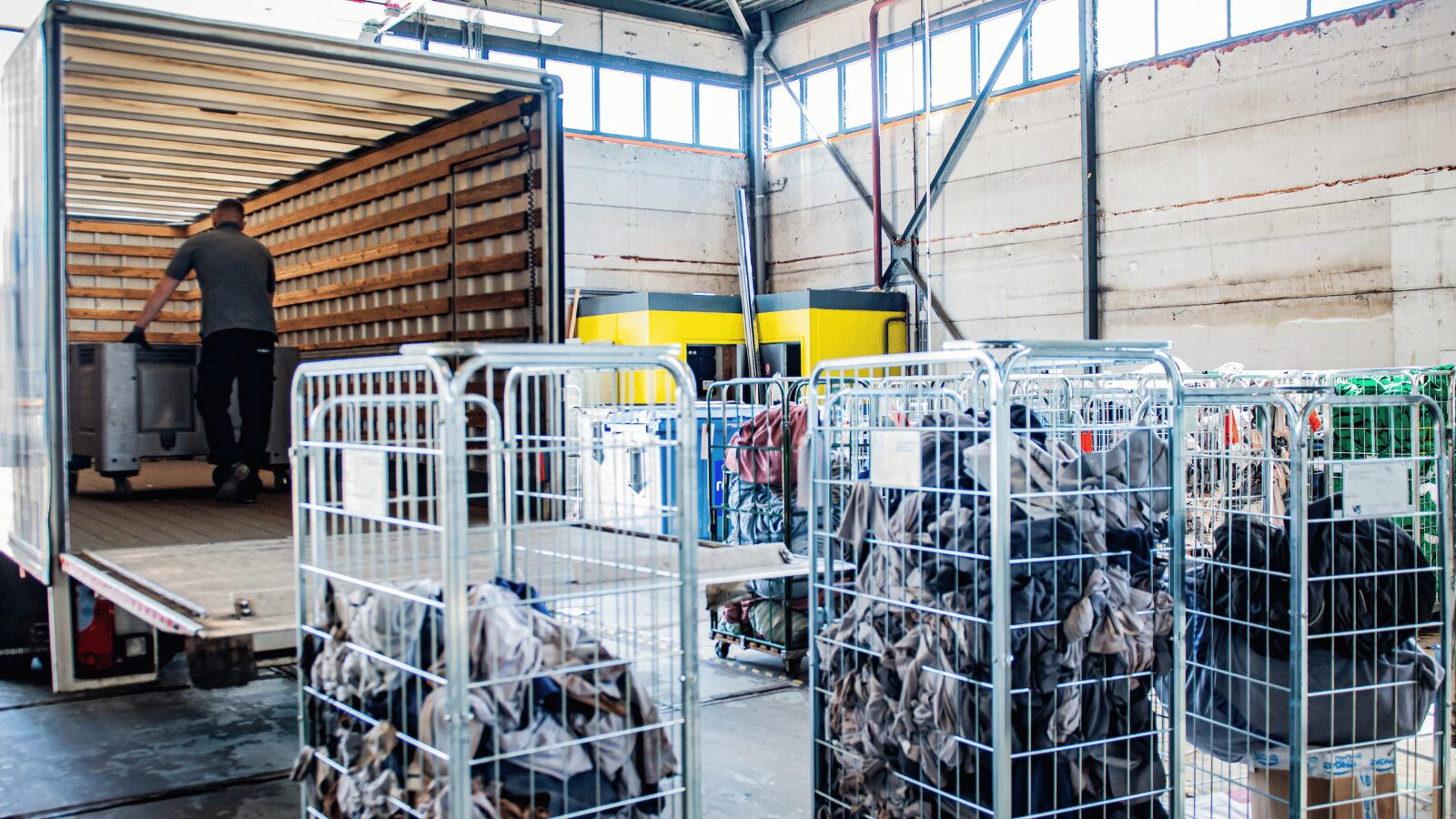
Much of the wasted mileage in a laundry operation comes from a single, familiar problem: soiled linen left behind at the customer. For years, vehicles were planned to leave the plant completely full of clean textiles, which meant there was simply no room to collect the soiled load on the way back. A second trip was then needed to recover what had been left, doubling the distance for the same work.
The nature of the load makes this worse. Clean textiles are folded and compact, while soiled items are thrown loose into cages. As Ruth explains, a route might deliver three cages of clean linen yet need to collect four cages of soiled in return.
Rethinking the Route
The turning point came from taking a holistic view rather than fitting each new customer onto whatever route happened to have space. Every customer was categorised by delivery type, by time window, by cage or bag work, and by how long the driver spent on site. Combined with average volumes, this made it possible to build dedicated routes and to negotiate delivery windows, for example moving an early morning drop onto a dedicated night run.
The result was a significant reduction in fleet size. Instead of fifteen day routes requiring fifteen vehicles, the operation moved to ten day routes and five night routes served by the same ten vehicles. Better utilisation also created room for scheduled inspections, driver holidays, and sickness cover without disruption.
From Insight to Action
Effective routing does more than save fuel. It reduces the reliance on agency drivers, which matters for reasons that go well beyond cost.
“It is cheaper, but it is not about the monetary value. It is the customer interaction, and it is the reputation.”
RUTH MITCHELL – SERVICE MANAGER, ABS LAUNDRY BUSINESS SOLUTIONS
An agency driver covering an unfamiliar route takes longer and lacks the relationship a regular driver builds over time. A known driver greets the customer by name and understands the site, which protects both service quality and reputation.
Planning for Seasons and for the Future
Seasonality has a major impact on planning. City hotels stay close to full throughout the year, while coastal routes can swing from half occupancy in winter to complete occupancy in summer, effectively doubling the workload for the same vehicle. Anticipating those peaks avoids both shortages and waste.
The same forward planning applies to the fleet itself. Electric, hybrid, and hydrogen vehicles have long lead times, particularly when special adaptations such as side doors or ramps are required. With legislation around diesel vehicles tightening, operators cannot afford to react late.
“Previously it might have been morally right to do things sustainably. Now it has become a legal requirement, and it involves everyone.”
RUTH MITCHELL – SERVICE MANAGER, ABS LAUNDRY BUSINESS SOLUTIONS
Breaking Down the Silos
One of the most encouraging shifts is cultural. Transport and production were once siloed and often in conflict, with production pushing for faster returns while transport managed traffic, diversions, and mandatory driver breaks. Today those teams increasingly sit down together, aligning processing needs with transport legislation and planned preventative maintenance. That collaboration, in Ruth’s view, is what is quietly making life easier for everyone.
How ABS Laundry Business Solutions Approaches This Theme
ABS is not a route mapping system, and it does not aim to be. Its strength lies in the operational data that supports better decisions: accurate volumes and the history of those volumes, which feed directly into specialised routing tools through integration. When a weight is held against each product, delivery note volumes can flow straight into a routing platform.
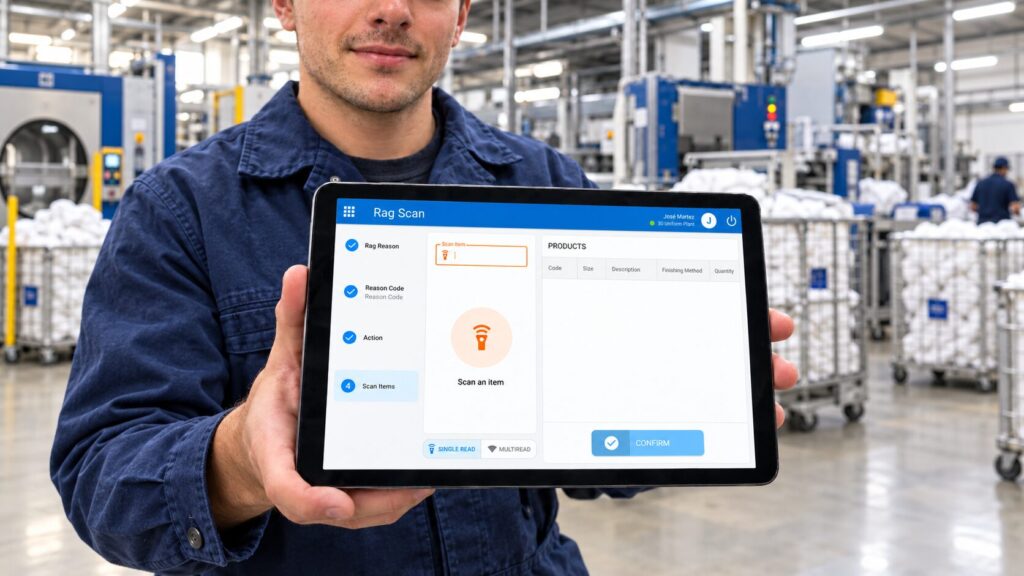
The most visible recent step is paperless delivery. Where a driver once carried fifteen printed pages that could fall out of order, the Route Assistant application now presents the round in route order, shows the transport manager exactly where each vehicle is, and removes the paperwork entirely. Linking this with load planning tools and route mapping integration gives transport managers a genuinely stronger position.
The Road Ahead: A Cleaner, Greener Future
The direction of travel is clear: a cleaner and greener future, whether through the vehicles, the fuel, or the method of delivery. A driver and a vehicle will always be needed, because as Ruth notes, the load is never going to come off the back on its own. What continues to change is how the work is planned and how closely operators work with their customers, right down to the little cards in hotel rooms that ask if you want to change your towels during your stay, that quietly reshapes volumes flowing through the fleet.
For the industrial laundry sector, transport is no longer a background cost. Handled well, every mile becomes a measurable contribution to efficiency, service, and sustainability. Organisations that treat logistics as a strategic priority will lead the way, and ABS Laundry Business Solutions is committed to giving them the data and tools to do exactly that.