Brand strategy and AI insights from across the Vitec group
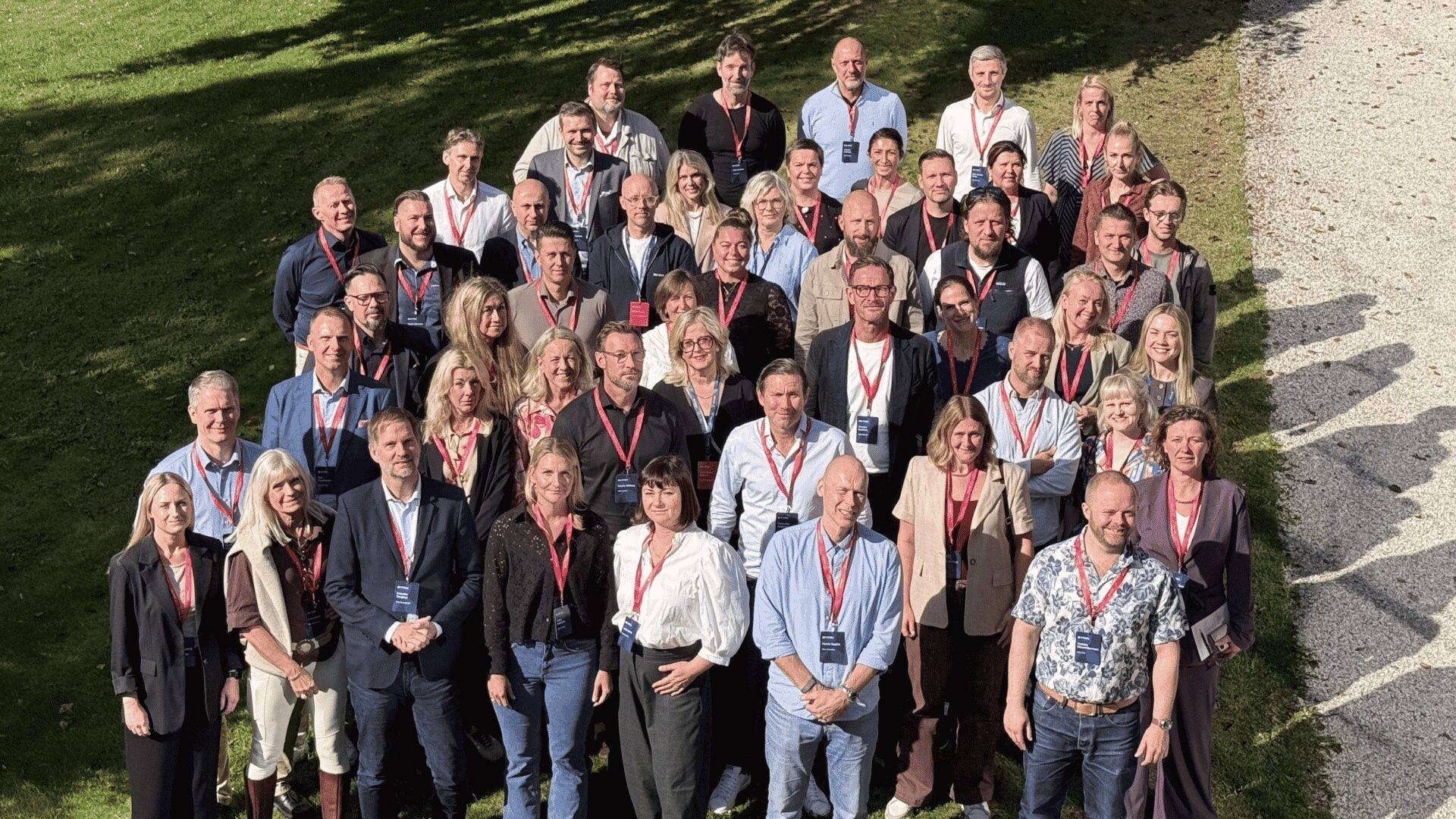
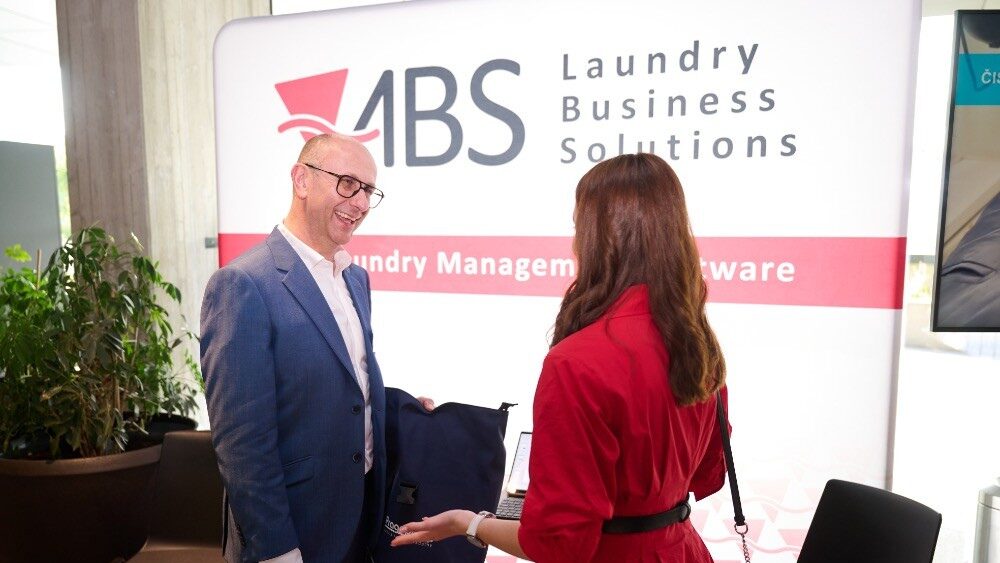
Every Vitec Software Group company was invited to take part in this year’s Marketing Council, a two day gathering for marketing colleagues across the group, hosted at Ellery Beach House in Stockholm. Robert Tye, Chief Commercial Officer, and Stijn Roefs, Marketing Associate, represented ABS Laundry Business Solutions, joining a program built around brand strategy, artificial intelligence and shared learning.
Robert Tye, Chief Commercial Officer
Stijn Roefs, Marketing Associate
Two Days in Stockholm
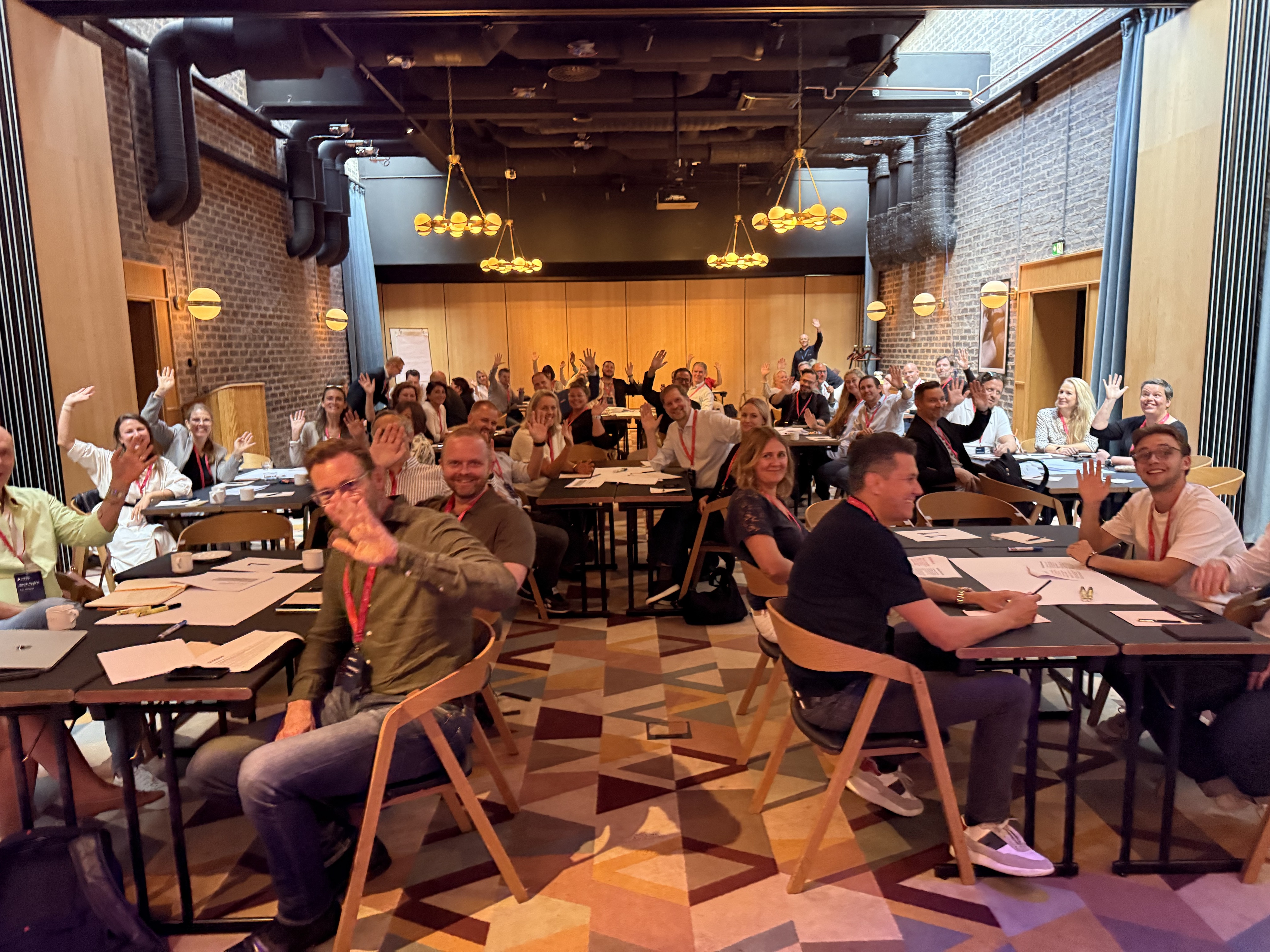
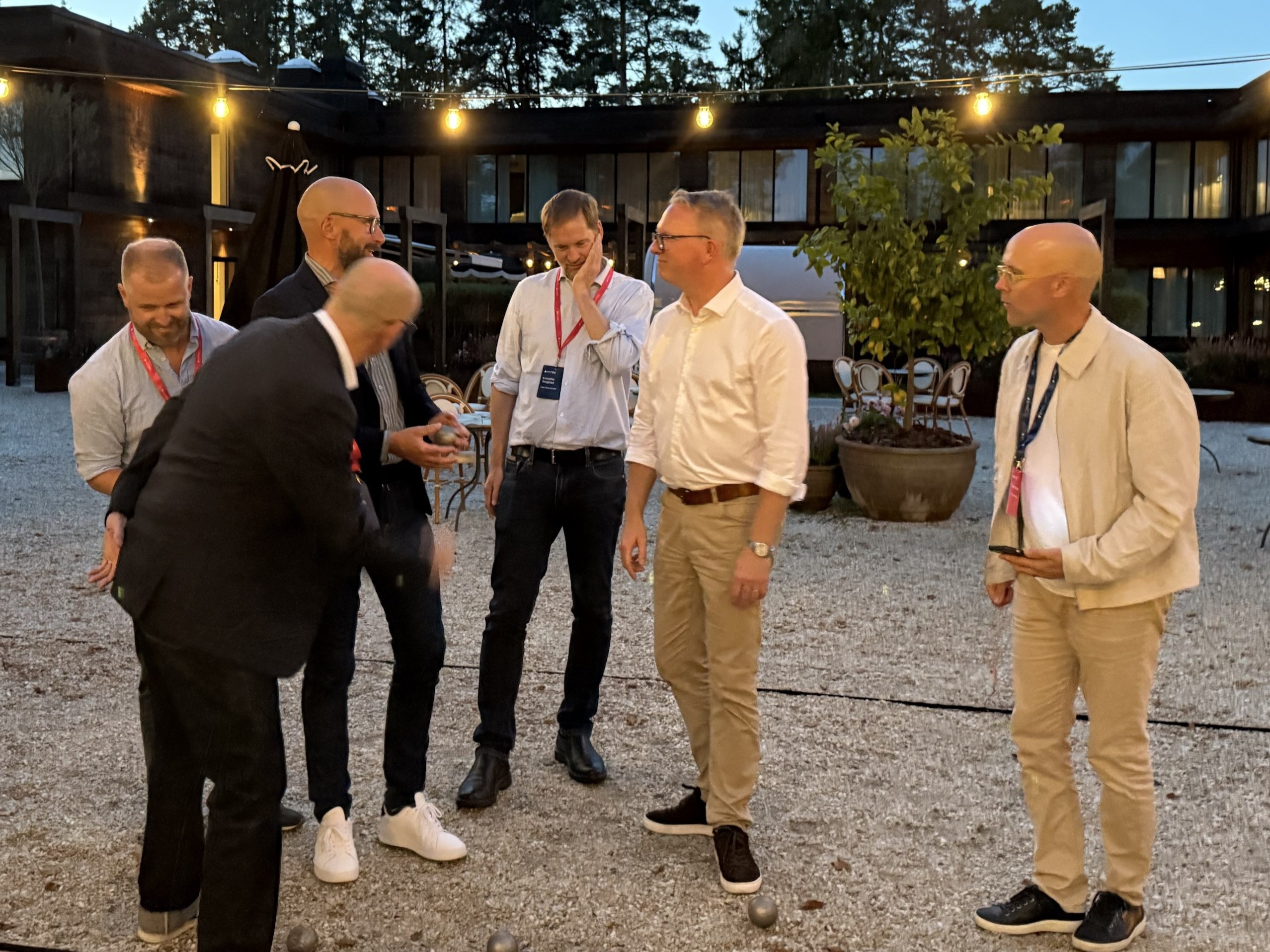
The program opened with lunch at Ellery Beach House, followed by an introduction to the days ahead. Business units from across the group took turns sharing their own stories, offering a closer look at how marketing is approached in different markets within Vitec. Workshops, fika breaks and a group check in gave everyone the chance to reflect and connect between sessions, while the evening program included dinner and time together at the Coco Beach Club.
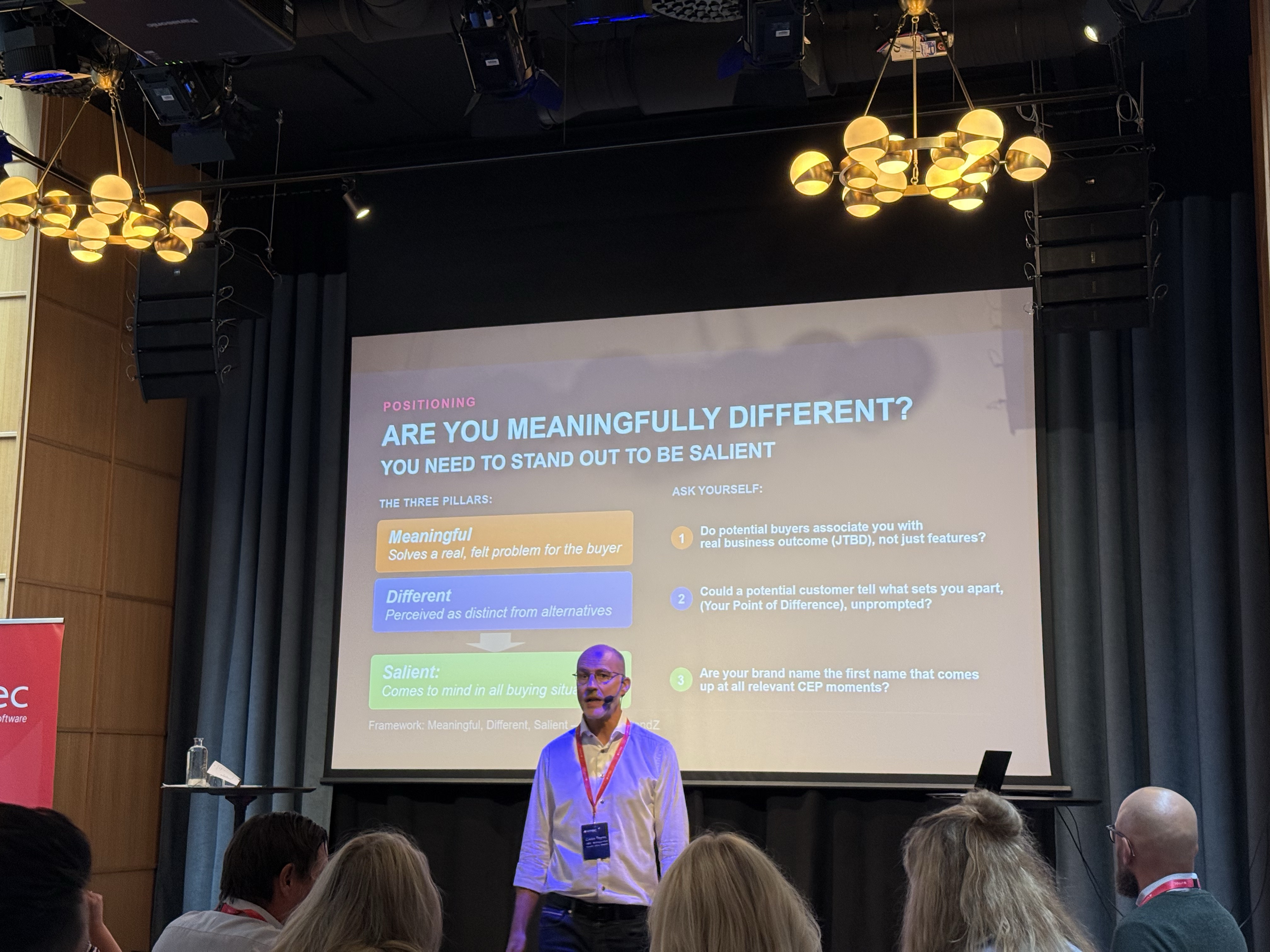
↑ Carl Peyron about Positioning
Brand Strategy with Carl Peyron
Carl Peyron, brand strategist and founder of Mind Your Brand, opened the program with a session on brand strategy across Vitec’s verticals. He started from the observation that organic growth is genuinely rare, which makes the choice of growth strategy an important one, and showed how companies within a group such as Vitec effectively sell three things at once: the product itself, the vertical it serves, and the endorser brand of Vitec. That combination works asymmetrically, since the endorser brand often carries more hidden potential to support growth than it first appears to.
A central idea was the hybrid strategy Vitec follows, described as freedom within frames. The Vitec brand acts as a quality seal for its business units: it signals reliability, conveys stability and corporate backup, and lowers the perceived risk for enterprise buyers. Because sales potential compounds in a decentralized group, a larger and better known corporate brand leads business units to be considered more often at the RFP stage, to receive more offers to bid on, to gain more purchases per unit, and to gather more resources for brand investment, forming a self reinforcing loop rather than a one time gain.
Peyron then introduced a core framework for B2B marketing that connects category entry points, the trigger moments when a buyer suddenly needs a new solution, to points of difference and points of parity, and eventually to the customer journey and funnel. He stressed that a brand should not rely on a single unique selling proposition, since recall of a stated USP fades within a year, and that points of parity should be delivered reliably while points of difference should set a company apart in a way that is credible and meaningful.
The session closed on the importance of salience and distinctiveness: well known, reputable brands are consistently shortlisted, while lesser known brands rarely make it that far. A meaningful difference also drives pricing power, and since only about five percent of potential buyers are actively in the market at any given moment, brands that want to grow need to reach all potential buyers rather than only those currently looking. For ABS, the session offered a clear way of thinking about brand positioning within the industrial laundry sector, and about how the ABS brand relates to Vitec as its endorser brand.
Podcasting for B2B Marketing, with Andreas Misund Berntsen
Andreas Misund Berntsen, content producer at Vitec Fixit, shared the story behind the podcast his team launched for the hair and beauty industry, called Timeboka, which translates to Stories About Growth. The format centers on interviewing recognised leaders in the industry, asking what challenges they have faced and how they solved them, so that viewers can take something practical back to their own salon or clinic.
He described the underlying idea as selling without selling: the goal is to provide value and entertainment first, and to appear as an expert within the field along the way. The team chose video over audio only, since a strong visual look travels further on social media, with Instagram reels bringing in by far the most exposure even though the podcast itself remains the main production.
Behind the scenes, the tips were practical rather than technical. Set design matters, so the team looks at how professional studios and well known podcasts use decor and lighting to give a plain room some personality. For audio, a good microphone placed close to the speaker matters more than an expensive camera, and simple additions such as curtains, soft furniture and acoustic panels make a noticeable difference to the sound.
On the results side, the team follows engagement on Instagram alongside subscriber counts and watch time on Spotify, and uses tracking links so campaigns can be traced through Google Analytics toward the book a demo page. Andreas was candid that attributing leads directly to a single episode is difficult, but the improved branding and the steady rise in traffic to that page made the effort worthwhile.
Bridging Product and Marketing with AI, with Øyvind Eliassen
Øyvind Eliassen, UX Lead at Vitec Fixit, followed with a session on how artificial intelligence can help bridge product and marketing teams. Vitec Fixit provides software and hardware for hair and wellness salons in Norway, and its product team is currently modernising the booking and cash register system that salons use every day, replacing a solution that dates back to the 2000s with one built for mobile devices and modern touch gestures.
Eliassen described how the product team works closely with sales, customer service and sometimes development to analyse existing solutions and gather input from customers. Regular workshops and user tests with salons are recorded on video or audio, and the resulting material, such as transcripts, sticky notes and whiteboard photos, is collected in tools like Dovetail, an AI driven customer intelligence platform, and FigJam, a collaborative whiteboard tool.
The core of his session was how artificial intelligence, and Claude in particular, can connect to these tools through MCP, the Model Context Protocol, to bridge product and marketing. Claude can query and summarize research data from Dovetail, extract quotes and insights from FigJam boards, and read designs directly from Figma, then turn that combined material into content such as webpages or presentations, or even generate reusable Claude skills for recurring tasks. This way, insight gathered by product teams through customer research can flow more directly into marketing output, so that what makes a product genuinely easy and pleasant to use also comes through clearly in how it is marketed.
Marketing as a Small Business Unit, with Vitec Appva
Ulrika Kjellberg, CCO, and Johanna Stigring, responsible for UX, brand and visual communication at Vitec Appva, talked about what it means to run marketing as a small team inside a much larger group. Vitec Appva, active in medical documentation software for Swedish municipalities, is a market leader with one product in Sweden while still working to build recognition with another product and in a newer market such as Norway, so the same small team often has to serve very different positions at once.
A central theme was the balance between the product brand and the company brand. Appva is already well known and trusted within care, and being part of Vitec Software Group adds stability, credibility and a longer track record, but it also means investing in staying clearly recognisable next to other group companies. To serve both audiences, the team runs two separate websites, one aimed at corporate and group related communication and one focused purely on the product, so that each visitor lands on the information that is actually relevant to them.
On the practical side, Ulrika and Johanna described moving from ad hoc activity toward a structured yearly marketing plan and a shared content calendar, particularly for LinkedIn, so the whole team can see who is doing what, when and in which channel. Artificial intelligence plays a supporting role throughout this process, used as a sounding board for ideas, structure and copy, and to test visual directions when the right image is hard to produce, while the final judgement on tone and quality always stays with the team.
Nationwide Chain Software, with Vitec Intergrip
Bart van den Berge introduced Vitec Intergrip, whose mission is to help schools and municipalities work together so that every young person in the Netherlands reaches what the team calls a suitable destination, whether that means more education, a job, or day activities. The platform connects education, municipalities and regions with chain software that is now used in 36 regions, covering ninety percent of the country, with more than 300 municipalities, over 1000 schools and more than 200000 students followed every year.
He explained that schools, municipalities and regions are required by law to collaborate, which is exactly what Intergrip’s platform is built to support, alongside services such as GDPR compliance and an ISO 27001 certification. The team wants to be seen as the national expert in digital chain collaboration, with brand values that include reliable, secure, stable, supportive, collaborative and built on a proven method.
On strategy, Bart described the sales plan for 2026 as growth through focus, starting with retaining current customers and upselling existing modules, then creating new modules, and only after that expanding into new regions and sectors. He also introduced the idea of becoming what he called an ambidextrous organization, exploiting what already works while carefully exploring new products, guided by a clear internal framework before any new idea moves forward.
He closed with an open question to the room: Intergrip’s approach has proven effective against youth drop out in the Netherlands, and he was curious whether other Vitec companies recognise the same challenge in their own countries, and whether it might be worth exploring together.
A Valuable Two Days
For ABS, the Marketing Council was a valuable opportunity to step back from daily work, learn from colleagues across very different markets, and see how brand strategy and artificial intelligence tie into practical marketing work. Robert Tye and Stijn Roefs return with new ideas, new contacts and a clear appetite to bring some of what they learned into future ABS campaigns.
↑ Workshop in the conference room
↑ Playing boul with the Vitec team
About Vitec Software Group
Vitec Software Group is a leading provider of vertical software, headquartered in Umeå, Sweden, and listed on Nasdaq Stockholm. The group develops and delivers standardized software for a wide range of niches, including pharmacies, banks, car workshops, real estate, healthcare, education and laundry and textile rental, the market in which ABS Laundry Business Solutions operates. Today, Vitec brings together around 1,870 colleagues across its business units, all working from a shared, entrepreneurial background and a long term view on the products they build.