Ruth Mitchell, Service Manager at ABS Laundry Business Solutions, brings twenty years of experience in industrial laundry operations to every conversation about health and safety. Alongside her hands on background, she holds IOSH and NEBOSH qualifications, giving her both practical and formal expertise in preventing accidents on the laundry floor.
In this conversation, she shares how the industry’s approach to safety has changed over the past two decades, and what laundries can do to move from a good safety record to a great one.

Ruth Mitchell, Service Manager
“So health and safety is everyone’s responsibility. It just depends at what level you are as to how much responsibility you have for that.”
Ruth Mitchell, Service Manager, ABS Laundry Business Solutions
A Shift in Safety Culture
Twenty years ago, health and safety was rarely a priority in industrial laundries. Today, that has changed considerably, largely thanks to safer machine design and a shift in mindset among staff and management. Where laundries once focused solely on getting orders out the door, safety now sits alongside productivity as a daily priority.
One of the clearest signs of that shift is how teams handle near misses. Instead of waiting for an accident to happen, more staff are reporting near misses so that risks can be addressed before anyone gets hurt.
Where Improvement Still Happens
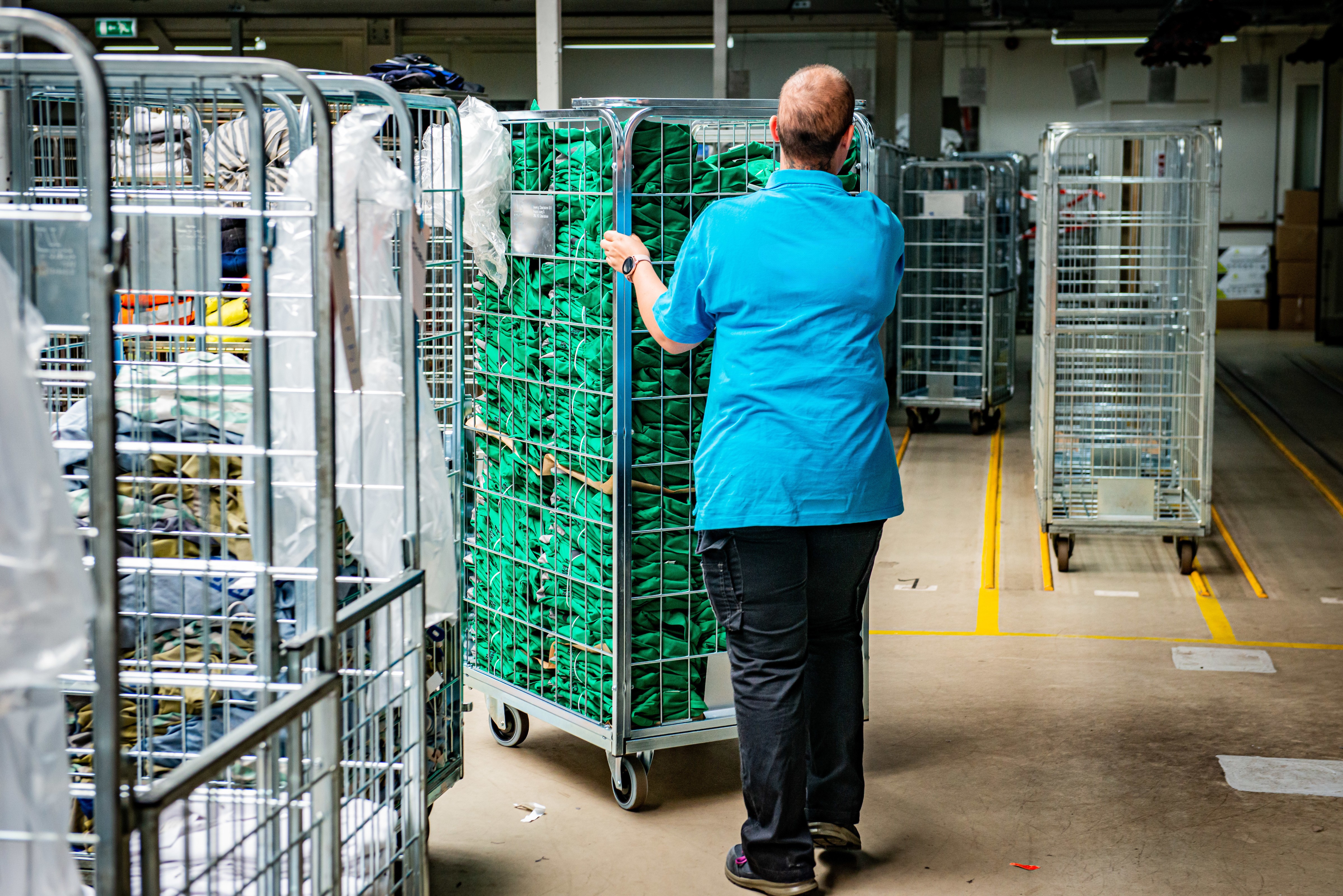
1. Housekeeping. Blocked walkways, blocked fire exits, and items left on the floor remain the most common issues on a busy laundry floor. Most incidents come down to something simple, such as not putting an item back where it belongs.
2. Reporting near misses. Encouraging staff to report near misses, not only accidents, allows a laundry to resolve small risks before they cause real harm.
3. Fire prevention. Setting a processing cutoff time for flammable items such as kitchen and gym towels reduces the risk of overnight fires, since staff remain on site to notice a problem early.
4. Transport and manual handling. Loading yards and manual handling remain among the biggest sources of accidents, which makes driver awareness, high visibility clothing, and proper training essential.
Beyond individual behaviour, Mitchell pointed to the structures that keep a laundry safe at a management level. Production managers typically carry out a walkaround first thing in the morning to confirm walkways and equipment are in order, then keep watching throughout the day for anything out of place, such as stray linen or a misplaced cage. Risk assessments are reviewed at least once a year, twice yearly in many cases, or immediately after an incident. Safe systems of work translate those assessments into clear, step by step instructions for everyday tasks, such as packing a cage, so nothing ends up left where it should not be.
“It’s a complete mindset change. You know, people don’t report an accident, they report a near miss.”
Ruth Mitchell, Service Manager, ABS Laundry Business Solutions