Most software suppliers celebrate a go live. Michiel van Dijk is thinking about what comes next.
As Customer Project Support Manager at ABS, Michiel leads a team of specialists with deep product knowledge and one clear priority: keeping customers confident and operational at every turn. His focus is not just on resolving challenges quickly, but on building the kind of partnerships that hold up long after implementation is done.
At ABS, we decided a long time ago that this transition moment deserves just as much attention as the implementation itself.
“The handover from the project team to our department is not just an administrative step. It is a relationship transfer. The customer has spent months building trust with a consultant. We have to earn that trust from day one.”
That is why we formalized the handover process. Before a customer submits their first support ticket, there is an internal briefing where the consultant walks our team through everything: which modules are live, what customizations were built, where the customer is likely to need extra attention. Then we join a call together, the consultant introduces us, and we walk the customer through how to reach us and what to expect. It sounds simple. But it makes an enormous difference.
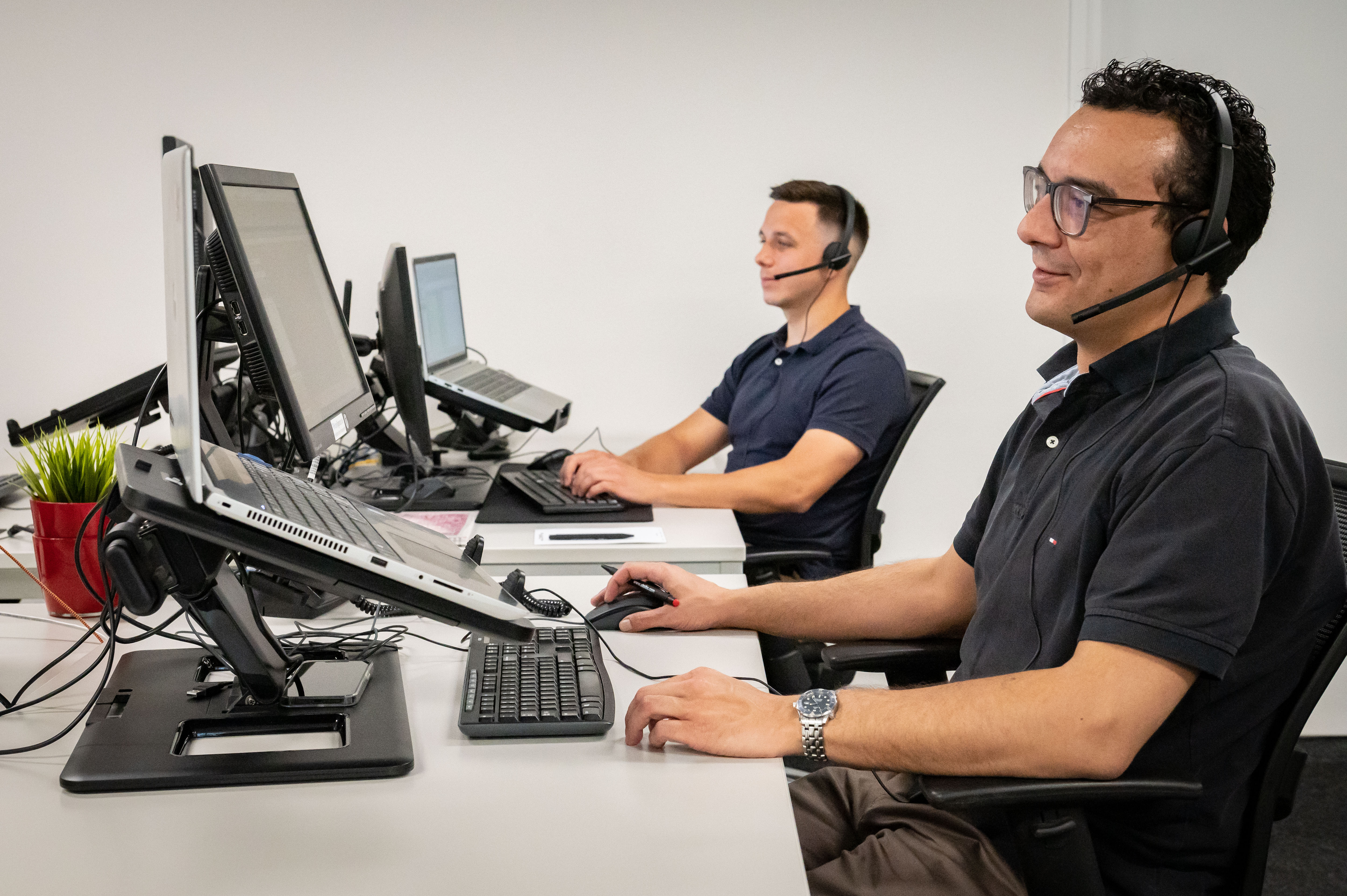
A team built for complexity
Industrial laundry operations do not run on office hours. That reality shaped how the team was structured.
The team is spread across multiple locations and time zones: Boxtel (NL), Rouen (FR), Minneapolis (US), Tokyo (JP), and Bucharest (RO), and between them customers are supported in Dutch, English, French, German, Japanese, Polish, Lithuanian, and Spanish.
“You cannot truly support a customer if you cannot speak their language,” is meant both literally and figuratively. Language fluency is one part of it. Understanding the operational context of a laundry, understanding what a blocked route accounting run or a malfunctioning RFID read means for their business, that is the other part.
For customers with more complex requirements, dedicated support teams in Tokyo and Bucharest work exclusively for a single customer. New development, functional support, bug fixing, all prioritized by the customer themselves. It is a fundamentally different model from shared support, and for the right customer it changes everything.
The quiet work that keeps operations running
Most thought leadership content in the software industry focuses on innovation. New features. New integrations. New capabilities. Understandably so.
But there is also the less glamorous side: the maintenance work that happens every week, quietly, without a press release.
Our maintenance teams produce patches when required across multiple software versions. Every fix is tested in the version where it was reported and then retested in every older version it needs to be backported to. Separate specialist teams handle database issues, integrations, mobile, and reporting. When a customer upgrades to a new release, a fast response team stands ready to address any issues that surface quickly.
This is what software partnership looks like in practice. Not a roadmap presentation once a year. A team that shows up when things are not working and gets them back on track.
Transparency as a support philosophy
One of the things that is intentional is keeping customers informed about where things stand. Every support case is logged and tracked through a clear set of statuses. Cases are not simply open or closed, but move through specific stages: waiting for support, in progress, waiting for customer clarification, deployed, customer to test, and so on. Customers are kept informed about exactly where their case stands at any point.
There is also an expectation on the customer side. Good support requires good input. A clear and recent example, reproduction steps, the relevant log files. When that is provided, resolution is faster and more precise. When it is missing, time is spent rebuilding context that should already be there.
“It is a two way relationship,” is often shared with customers. “Investigation and escalation will always happen, but clarity improves outcomes.”
What has been learned managing this team
After years in this role, the main observation is that customer support in B2B software is a relationship discipline, not just a technical one.
The customers served run critical operations. Their software needs to work. When it does not, the frustration is not directed at a piece of code, but at the people responsible for it. That responsibility is part of the job.
The industrial laundry sector is highly specialised. Many customers have been running their operations for decades and understand their processes in depth. When support teams match that level of knowledge and commitment, the relationship shifts from supplier to operational partner.
That is the direction being built towards every day.