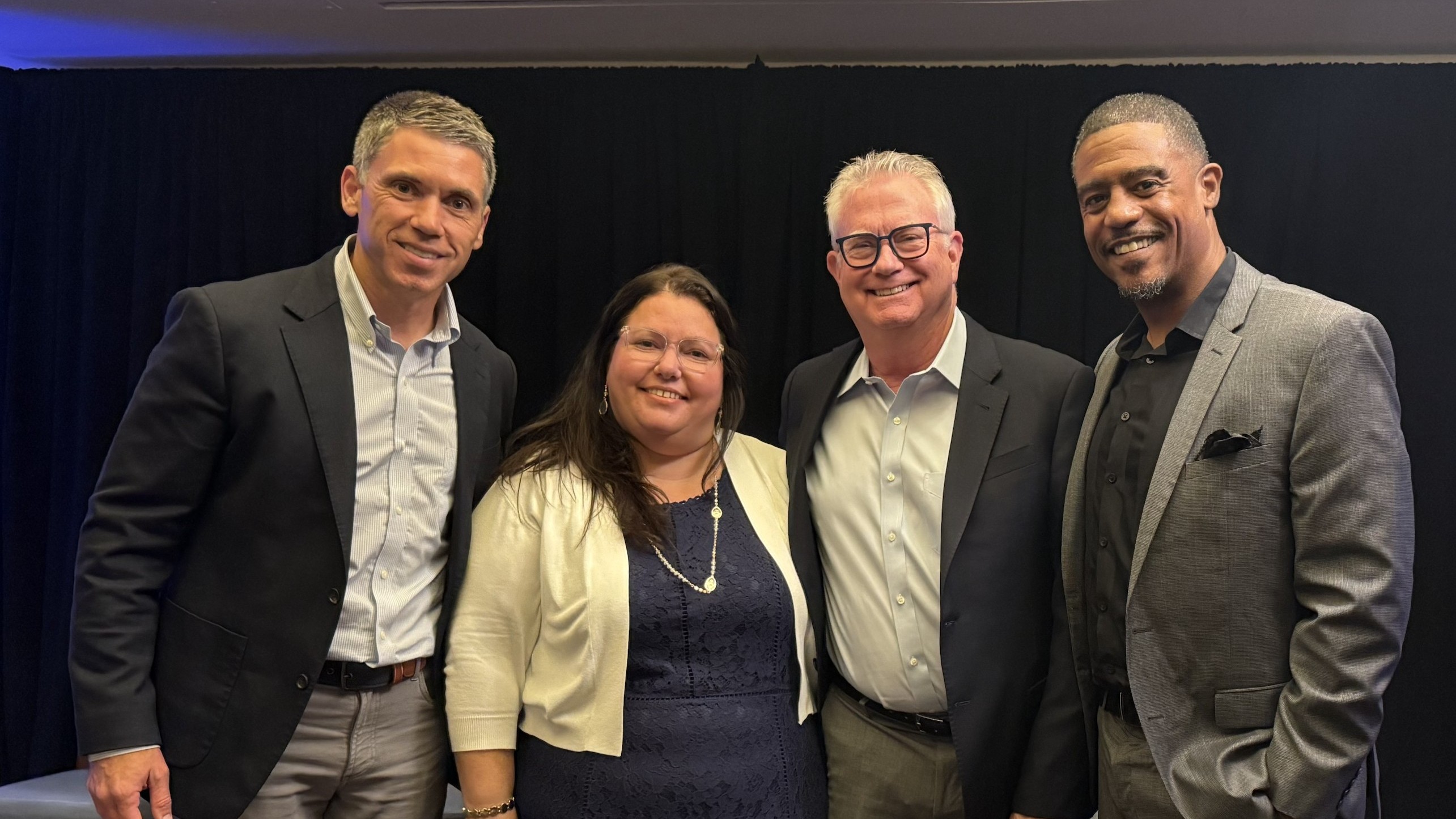
ABS Laundry Business Solutions attended the TRSA Hospitality / F&B Conference on September 16 and 17, 2026, at the Embassy Suites Boston Waltham. Kristi Sanders, Vice President of Customer Success North America, and Scott Rotkowski, Vice President of Sales North America, represented ABS throughout the two day programme, which brought together executives, general managers, and plant leaders from across the hospitality and food and beverage sectors.
Beyond attending sessions, Kristi took an active role in the programme. She moderated the panel “Linen Quality’s Role in Customer Satisfaction,” joined by Matt Vacca, Vice President of North American Hospitality Sales at Standard Textile Co., Steven Young, President and COO of Metro Laundry Service, and Tim Williams, President and CEO of Crown Linen Service. The discussion focused on how consistent linen quality shapes guest experience and how laundries and their hospitality customers can work together to protect it. Being asked to lead a conversation with executives from across the linen supply chain reflects the depth of expertise ABS brings to the industrial laundry and textile rental industry, and it gave the company a direct voice in shaping how the sector talks about quality and customer satisfaction.

Kristi Sanders
VP Customer Success, North America

Scott Rotkowski
VP Sales, North America
Robotics and AI Are Becoming Easier to Deploy
The conference opened with a session from Matthew Iles, Director of Marketing and Communications at Standard Bots, building attendees’ literacy in robotics fundamentals, from actuators and axis interference to zero force control, and how these concepts translate into error free material handling that can scale with a growing operation.
The session addressed a question every plant manager is asking: when are industry specific robots available and cost effective, and when does it make sense to invest? Iles offered a forecast for how robots built for linen handling will support integration opportunities such as RFID connectivity that drives the entire process from soil receiving to clean delivery. He also gave a candid, manufacturer’s perspective on what can and cannot yet be delivered, the setup pitfalls to avoid, and realistic expectations for cost, scalability, and ROI timelines.
What the Hospitality and Restaurant Markets Are Signaling
Didio Pequeno, Director of Hospitality Market Analytics at CoStar Group, gave an executive level overview of the American and global hotel industry built specifically for linen, uniform, and facility services leaders serving the lodging sector. Drawing on market data, the session highlighted how travel demand, labor, brand standards, and guest expectations are shaping hotel performance and what those shifts signal for the service partners supporting hotels.
In a parallel session, Victor Fernandez, Chief Insights Officer at Black Box Intelligence, offered a data driven look at the restaurant trends influencing the market today, including dining patterns, menu and pricing strategies, labor dynamics, and the balance between on premise and off premise growth.
Together, these sessions matter for laundry operators because changes in hotel and restaurant performance, pricing, and operating models directly influence linen demand and how sensitive customers are to cost. Understanding these broader market dynamics gives laundry providers a stronger basis for conversations with hospitality customers about service levels and pricing.
Creating Value Across the Linen Rental Model and Restaurant Segments
A session led by David Stevens, CEO of TSA, and Nigel Graham, Procurement at Bourne Leisure, tackled a question that still shapes much of the market: why do many hotels continue to operate in-house laundries when the rental model has transformed hospitality markets elsewhere in the world? Drawing on decades of experience introducing the rental model into markets traditionally dominated by in-house operations, the session laid out how to present linen rental as a strategic business solution, the barriers that slow adoption, and the operational, financial, and sustainability benefits it creates for hotels, alongside the commercial advantages and long term partnerships it creates for laundries. The session also featured feedback from hotel operators on why they chose the rental model, followed by an interactive Q&A with Joe Ricci, President and CEO of TRSA, on why the U.S. rental market remains relatively small and where the opportunities for future growth lie.
In a parallel session, Mark Kowalski, Managing Partner at Envise Partners, LLC, shared what interviews with upscale to downscale restaurateurs reveal about their experience with linen service, including the highs and lows of receiving industry services and the benefits and drawbacks of the various products they procure.
Both sessions reinforced a theme that ran throughout the conference: understanding the specific operational reality of a customer, whether a hotel group weighing rental against in-house laundry or a restaurant segment with its own procurement habits, is what allows a laundry provider to create genuine value rather than compete purely on price.
Moving the Conversation From Price to Value
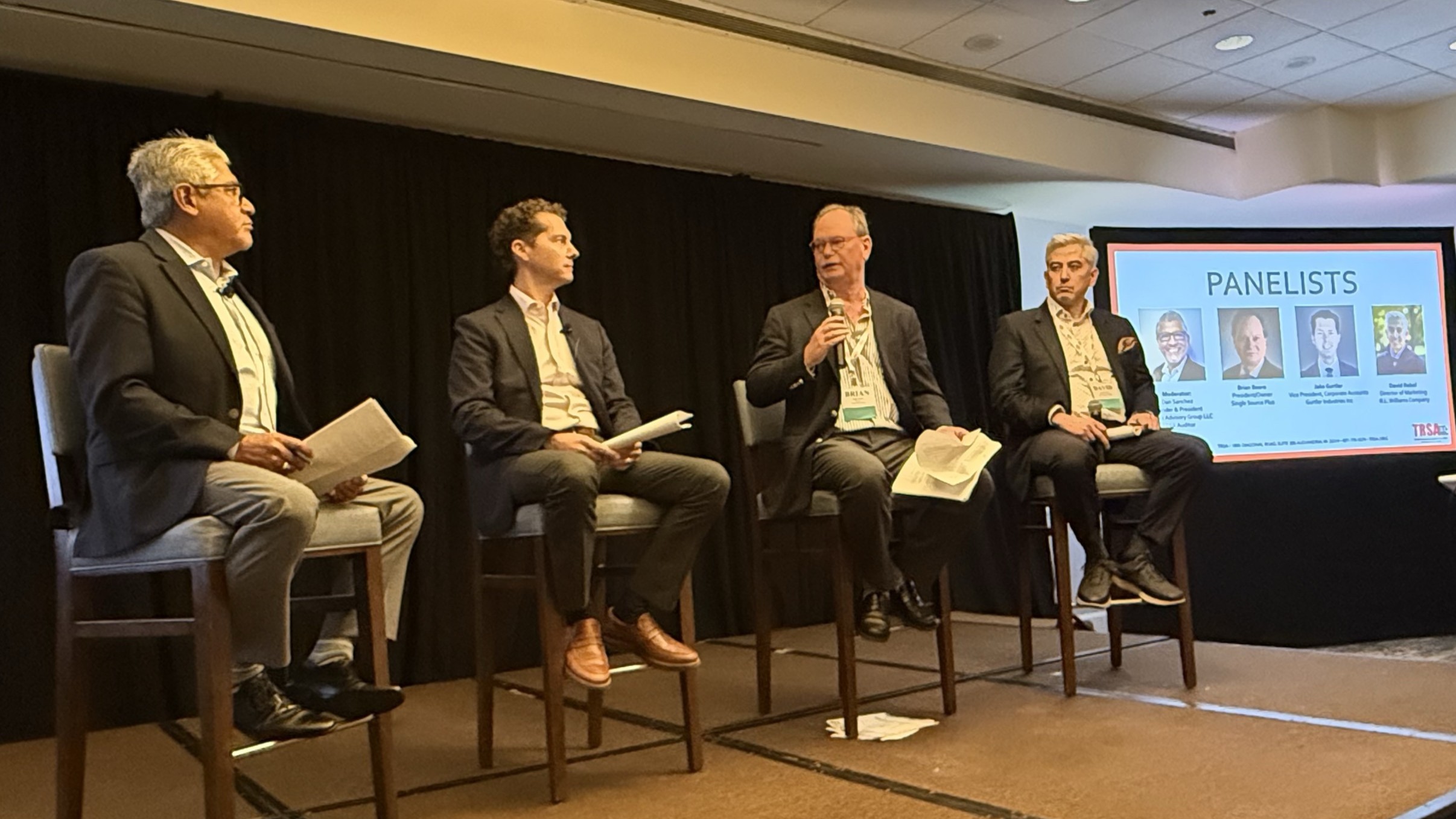
A session moderated by Dan Sanchez, Founder and President of Sanchez Advisory Group LLC and TRSA Auditor, focused on positioning products and services as strategic solutions that improve cleanliness, safety, operational efficiency, and business growth. Panelists Jake Gurtler, Vice President of Corporate Accounts at Gurtler Industries Inc., David Rebol, Director of Marketing at R.L. Williams Company, and Brian Beere, President and Owner of Single Source Plus, shared tactics for moving customer discussions beyond price and toward the long term value of partnering with a single source provider for facility services products, including how to tailor an approach to each account’s circumstances, identify high potential prospects, and demonstrate how solutions reduce staff burden and support growth objectives.
Panelists also discussed what customers evaluate most when choosing a vendor: quality, price, service, and relationship, with service and relationship consistently rated as decisive factors. Customers are looking for transparency, dependable delivery, and a partner who understands the realities of running their business, not a purely transactional supplier. Regular business reviews that show both billable and non billable work were highlighted as an effective way to demonstrate the full investment a provider makes in the relationship.
Linen Quality’s Role in Customer Satisfaction
Kristi Sanders moderated a session on moving linen quality conversations with hotel and restaurant customers toward a more consultative, value driven approach. Joined by Matt Vacca of Standard Textile Co., Steven Young of Metro Laundry Service, and Tim Williams of Crown Linen Service, the panel shared ideas for communicating how linen quality impacts a customer’s own guest experience, and worked through how to articulate the power of effective par levels alongside how rental and customer owned goods compare in cost and operational benefit.
Leadership Insights: Navigating Trends, Challenges and Opportunities
The conference closed its main programme with a leadership panel bringing together F&B and hospitality market CEOs to reflect on the key themes of the two days. Moderated by Joe Ricci, President and CEO of TRSA, panelists Ryan Swartz, Senior Vice President at PureStar Group, Philip Sharpe, CEO of United Hospitality Services, and Richard Marzo, Vice President of Marketing and Sales at Lace House Linen Supply, shared high level insights on evolving customer expectations, workforce needs, operational pressures, and areas for innovation. Turnover should not be treated as an unavoidable feature of the industry, panelists agreed, and giving employees a visible career path can turn entry level roles into a starting point rather than a dead end.
This connects directly to the automation discussion from earlier in the conference. Automation is not primarily about reducing headcount. It is about removing repetitive or physically demanding tasks so employees can move into higher value roles, provided that investment in training and career development happens alongside the technology.
The day closed with a facilitated roundtable discussion, giving all attendees the chance to bring the themes of the programme back to their own operations before a networking reception in the evening.
A Firsthand Look at Crown Uniform and Linen Service
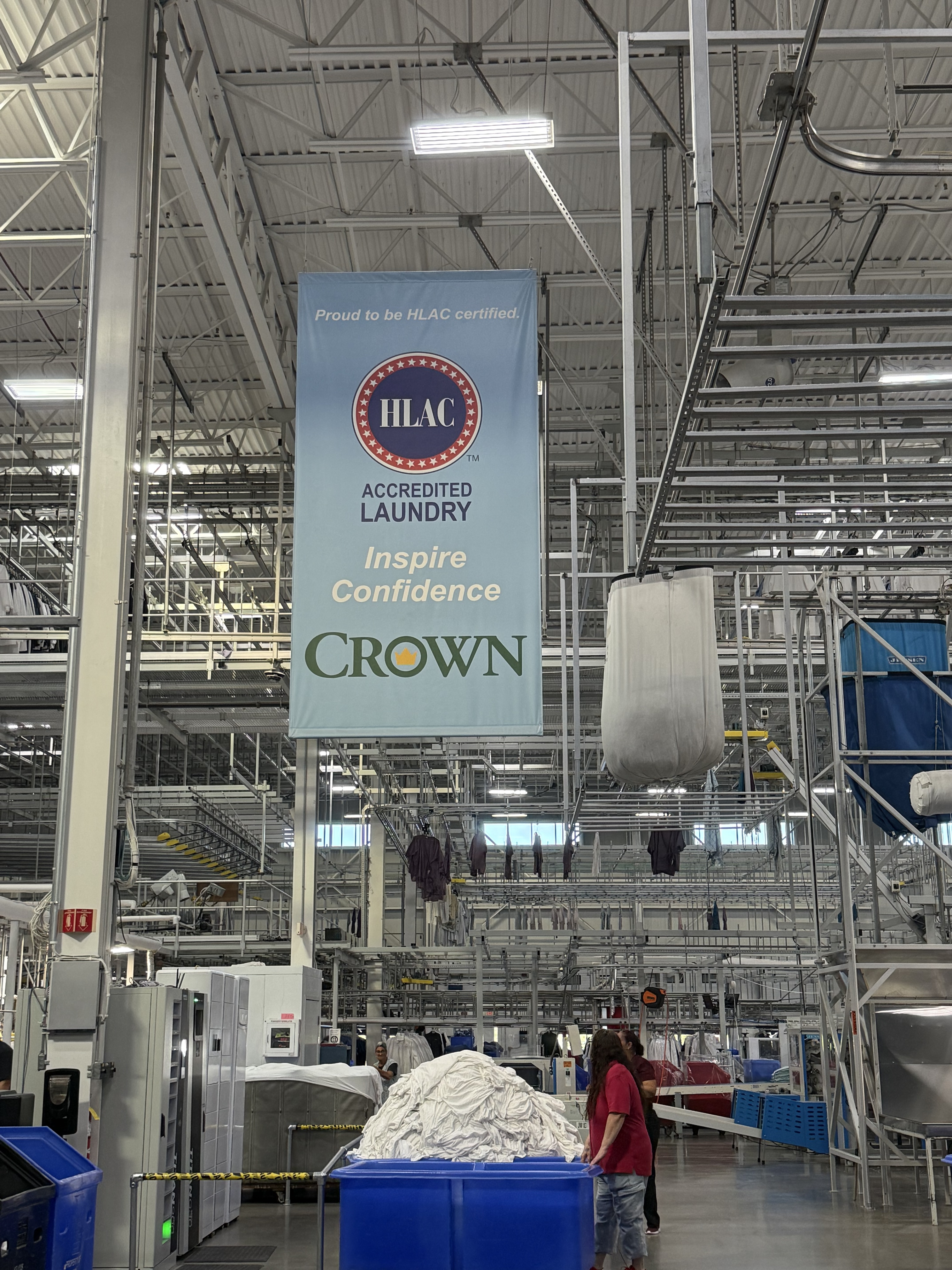
On the morning of September 17, ABS joined a plant tour of Crown Uniform and Linen Service, at the company’s corporate headquarters and state of the art processing center in Brockton, MA. The tour showcased advanced laundry technology, award winning environmental practices, and the meticulous processes behind delivering clean, professional uniforms and linens to businesses across New England. Seeing the people, technology, and quality standards that have made Crown a trusted, family owned company for more than a century gave the ABS team a grounded perspective on how the ideas discussed throughout the conference apply in a real plant environment.
Key Takeaways for Industrial Laundry Leaders
For C level executives and plant managers across the United States and Canada, several themes from the conference stand out as areas worth acting on:
Technology should follow the problem, not lead it. Robotics, AI, and RFID are advancing quickly, but the starting point should always be a clearly defined operational problem and a clear return on investment.
Value should replace price as the center of customer conversations. Understanding a customer’s operation and using data to identify inefficiencies builds a stronger, more resilient relationship than competing on cost alone.
Becoming a partner requires consistent proof. Business reviews, transparency, and visible investment in a customer’s success carry more weight than any single sales pitch.
People and automation should be developed together. Retention improves when employees can see where their role leads, and automation works best when it frees people for more meaningful work rather than simply reducing tasks.
ABS thanks TRSA for organizing a conference that brought these conversations to the forefront of the hospitality and food and beverage sector, and looks forward to applying these insights alongside its customers across the industrial laundry industry.