Modern industrial laundries rely heavily on digital systems to manage production, logistics, garment tracking, and customer data. As operations become increasingly data driven, it becomes more important to ensure that employees have the correct level of access to the systems they use every day.
Controlled access helps protect sensitive information, prevents unintended system changes, and supports efficient workflows across departments. One of the most effective ways to manage access within a software platform is through Role Based Access Control, commonly known as RBAC.
What is Role Based Access Control?
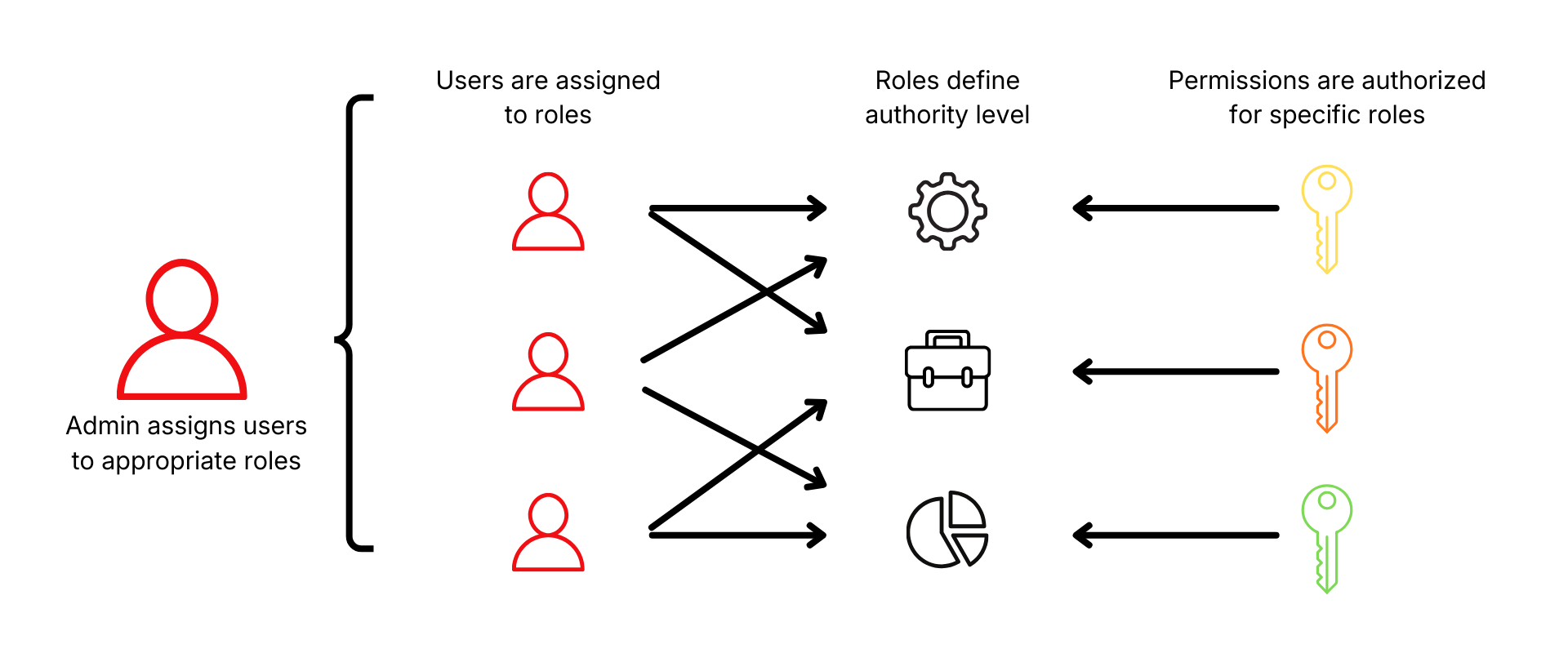
Role Based Access Control is a structured method for managing user permissions within a software system. Instead of assigning permissions individually to each user, access rights are linked to specific roles within the organization.
Each user is assigned a role that determines which screens, functions, and data can be accessed. In this way, the role defines what a person can and cannot do in the software environment.
RBAC typically follows three core principles:
- Role Assignment – Each user is assigned to a specific role, such as production operator, supervisor, or manager.
- Role Authorization – The assigned role determines the level of authority the user has within the application.
- Permission Authorization – Each role is configured with specific permissions. When a user is assigned to that role, the correct permissions are automatically applied.
This structured approach ensures that users receive the right level of access without the need for complex individual configuration.
Why RBAC Matters in Industrial Laundry Operations
Industrial laundries involve multiple teams working with the same software platform. Production staff, logistics teams, administrative employees, and management all interact with operational data. Without proper access management, this can quickly lead to confusion, mistakes, or security risks.
Role Based Access Control addresses these challenges in several ways:
Protection of sensitive business data
Certain information such as customer contracts, financial data, or operational statistics should only be accessible to authorized personnel. RBAC ensures that sensitive data is only visible to the appropriate roles.
Prevention of unauthorized system changes
Operational systems often contain critical settings that influence production workflows, garment processing, or logistics routes. By limiting access to these functions, RBAC helps prevent unintended changes that could disrupt operations.
Improved operational control
Managers and supervisors require more insight into processes than production operators. RBAC allows management roles to access additional monitoring tools, performance indicators, and operational controls.
Structured workflows between departments
When employees only see the functions relevant to their tasks, software interfaces become clearer and easier to use. This helps create more structured and efficient workflows across departments.
Practical Examples in a Laundry Environment
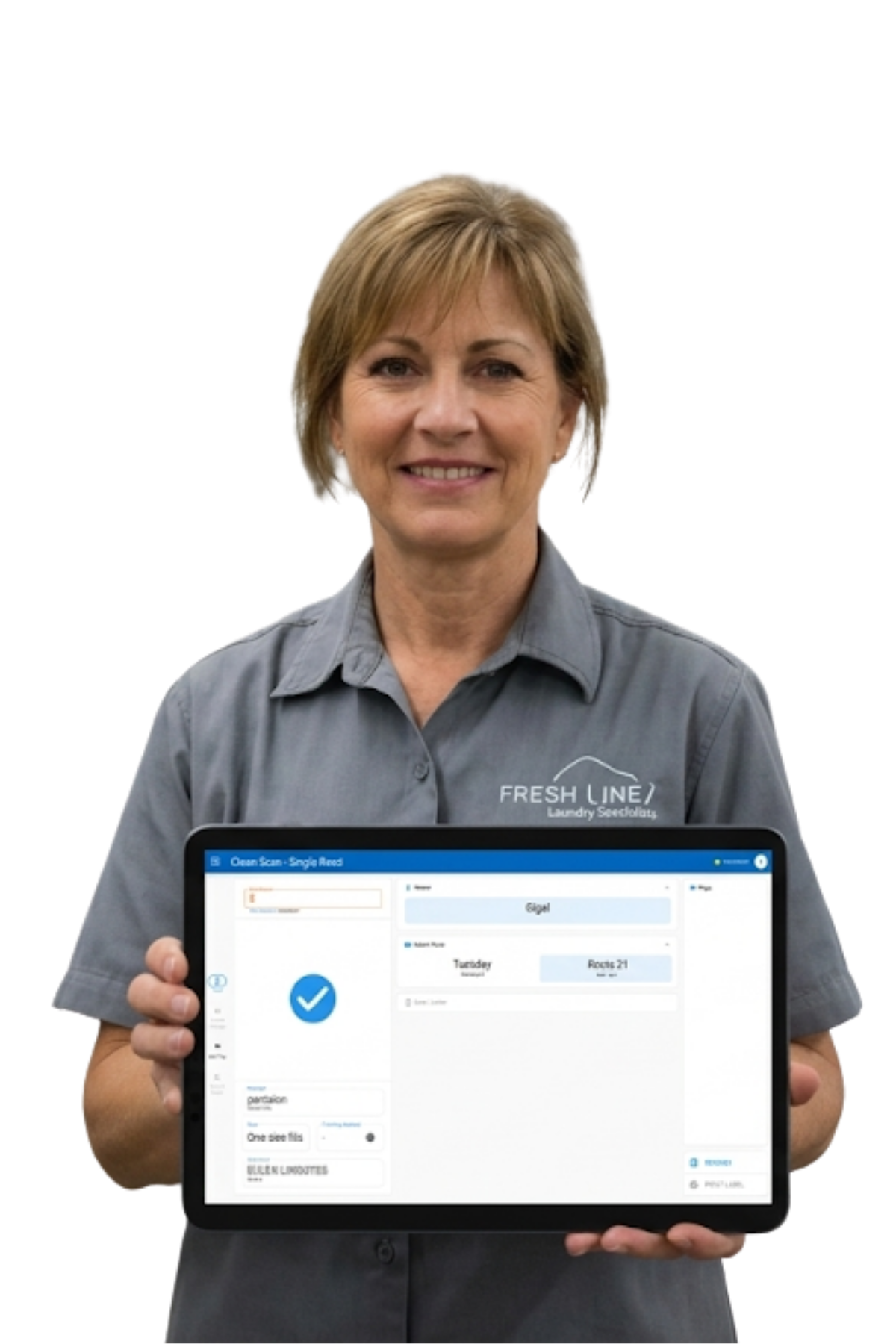
Sheila – Production Operator
Sheila works on the production floor, scanning and processing garments throughout the day. Her interface is intentionally simplified to allow her to work quickly and efficiently. She sees operational details such as the wearer, return route, product type, size, finishing method, and customer information. This helps her confirm that each item is processed correctly and sent to the right destination.
The actions available to Sheila are limited to standard tasks like confirming scans, initiating a rewash, or reprinting a label. More complex adjustments or process changes are hidden, reducing the chance of errors and keeping her workflow smooth.
David – Plant Manager
David oversees the same scanning process but requires a more advanced view to monitor operations and manage exceptions. His screen includes additional operational information such as day counters, classification of collected items, and visibility of the assigned washing processes. This overview allows him to quickly identify irregularities or bottlenecks in the production flow.
David can also take actions that influence the workflow, like returning items to stock, marking items as rag, creating repair requests, or setting priority levels. This authority enables him to maintain quality control, monitor performance, and ensure the entire laundry operation runs efficiently. It also allows him to intervene when necessary and keep production running smoothly.
Benefits for Security and Efficiency
RBAC strengthens security by ensuring that only authorized personnel can access sensitive information or critical system functions. It reduces operational errors by simplifying the user interface for each role. Additionally, it allows organizations to scale efficiently, as new employees can be assigned a role instead of configuring permissions individually. This maintains consistent security standards and operational reliability across the organization.
“RBAC is not just about keeping data safe. It makes daily work smoother for the team and gives managers a clear view to make the right decisions.”
– Jeroen de Vries, Product Owner